Breaking the Iron Curtain: Areg Kochinyan on the Future of Armenian-Azerbaijani Peace
12-03-2026 17:14:40 | Armenia | Interviews
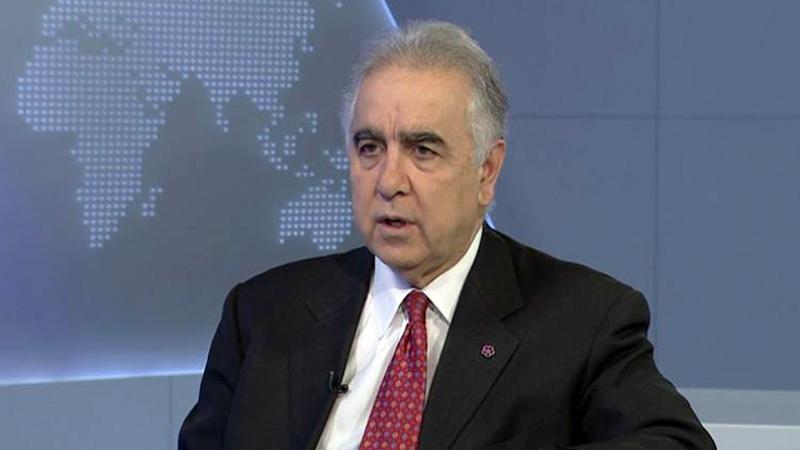
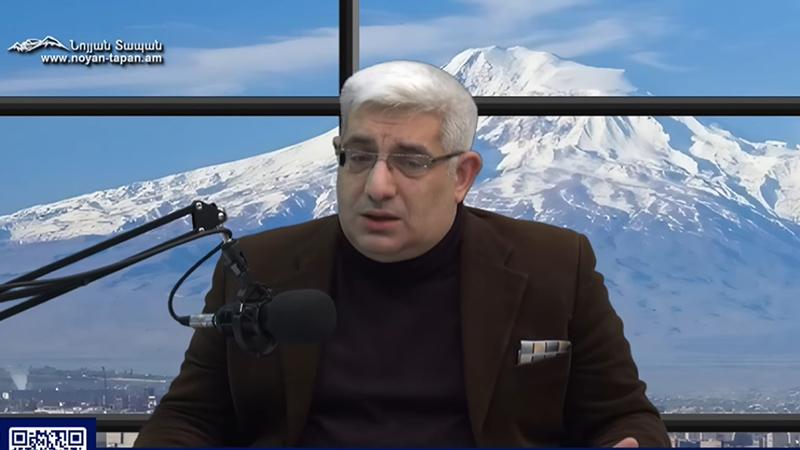
In a region long defined by frozen conflicts and closed borders, a new diplomatic experiment is quietly gaining momentum. In a recent in-depth interview hosted by Noyan Tapan, Areg Kochinyan, political scientist and head of the Armenian Council analytical center, detailed the evolution of the “Peace Bridge Initiative,” a civil society-led format that has achieved milestones once thought impossible in the decades-long standoff between Armenia and Azerbaijan.
The discussion, led by Noyan Tapan's Gayane Arakelyan, shed light on a series of recent breakthroughs, including the first direct flights between Yerevan and Baku in thirty years and a landmark meeting where delegates crossed the state border on foot.
The Peace Bridge Initiative, as Kochinyan explained, was born from years of expert-level contacts facilitated by international mediators. However, the current format marks a radical departure: it is strictly bilateral, operating without third-party facilitators or Western donors.
"For us, it was very important that our own countries—not third parties—funded these efforts," Kochinyan told Noyan Tapan. "This moves the normalization process to an entirely different political plane".
The physical symbolism of the meetings has been equally significant. Following successful air travel between the capitals, the third meeting in February saw forty participants gather at a newly delimited and demarcated section of the border. Kochinyan described the scene of the Azerbaijani delegation passing through Armenian passport and customs control as a moment of profound normalcy.
"I compared this to our daring to break through an 'Iron Curtain,'" Kochinyan remarked. "By the third meeting, the initial aggression and emotional reactions in the public had subsided. It has become a permanent format of communication".
Despite the weight of historical grievances, Kochinyan emphasized that the meetings have maintained a "calm, working atmosphere". The agenda is not limited to pleasantries; it tackles the most sensitive issues facing both nations:
Humanitarian Concerns: The fate of prisoners of war and missing persons from both sides.
Security: Delimitation of borders and the clearing of minefields.
Economic Integration: The unblocking of regional transport communications.
"We have reached a condition where we can discuss our contradictions in a civilized manner," Kochinyan stated, noting that the goal is to move beyond mutual accusations to a genuine search for solutions.
The Russian Shadow and the Sovereignty Loop
A central theme of the conversation was the role of external actors, specifically Russia. Kochinyan offered a blunt assessment of Moscow’s historical influence, labeling the Russian Empire and its successors as the "chief manipulators" of the South Caucasus.
"Historically, every time the central power in the empire weakened... clashes began in the South Caucasus," Kochinyan argued, citing the 'Divide and Rule' strategy as a tool used to maintain colonial control. He posited a provocative thesis: that the sovereignty of both Armenia and Azerbaijan is inherently tied to their ability to find peace independently.
"The sovereignty of Azerbaijan and the sovereignty of Armenia are only possible in real-time, real-world politics in the event of peace between these two countries," he told the host.
Kochinyan warned that the window for a peace treaty is narrow. As the war in Ukraine reaches a stalemate or a temporary conclusion, he predicted that Russia would inevitably seek to "release its energy" back into the Caucasus to re-establish its traditional levers of power. "There is a readiness in Baku and a readiness in Yerevan now, but in a few months, this opportunity may no longer exist".
The path to peace is further complicated by Armenia’s internal political landscape. With parliamentary elections approaching in June, Kochinyan identified the vote as the "main variable" in the regional equation.
He categorized the current political field into four main camps: the ruling party led by Nikol Pashinyan, and three major opposition forces he characterized as "pro-Russian". Kochinyan noted that while he does not seek to personify the peace agenda with a single party, the current reality is that only one major political force is actively championing the normalization process.
Regional Volatility: The Iran-US Conflict
The interview concluded with an analysis of the escalating conflict between the United States, Israel, and Iran. Kochinyan described the situation as "exceptionally delicate" for Armenian interests, given that it pits a strategic partner (the U.S.) against a long-standing regional ally (Iran).
In the face of this "war of attrition," Kochinyan praised the Armenian government’s policy of "active neutrality". He dismissed calls from fringe domestic groups to intervene on behalf of Iran as "idiotic," urging the public to remain grounded in the harsh technological and military realities of the 2026 battlefield.
As the region stands at this historical juncture, the Peace Bridge Initiative represents a fragile but persistent effort to rewrite the rules of engagement. For Noyan Tapan’s audience, the message was clear: the map of the South Caucasus is being redrawn, and for the first time in centuries, the ink may be in the hands of the locals.



 ENGLISH
  Հայերեն
 Русский
 Դաս. հայերեն
 French