Navigating the Fragile Path to Peace: Armenia’s Geopolitical Crossroads
10-02-2026 15:44:05 | Армения | Аналитика
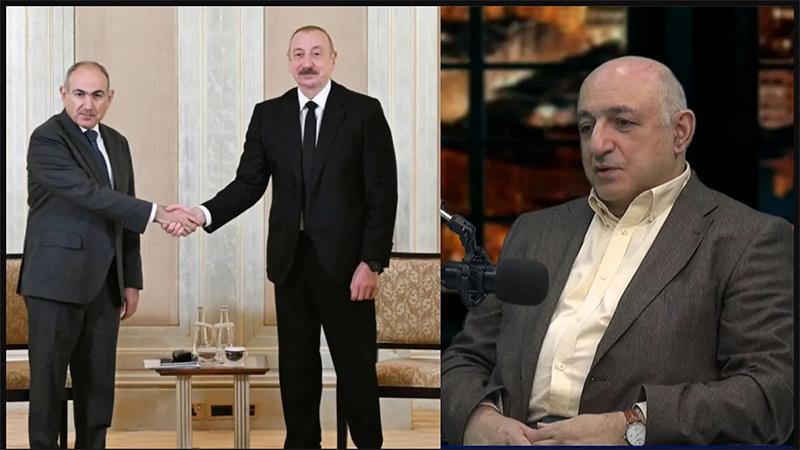
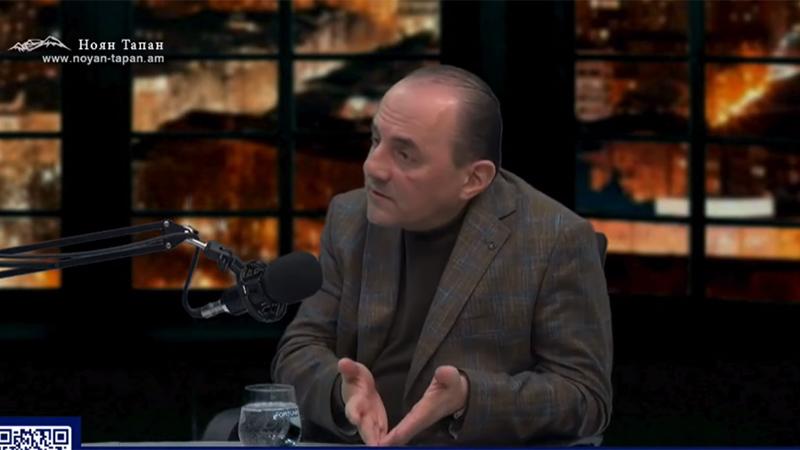
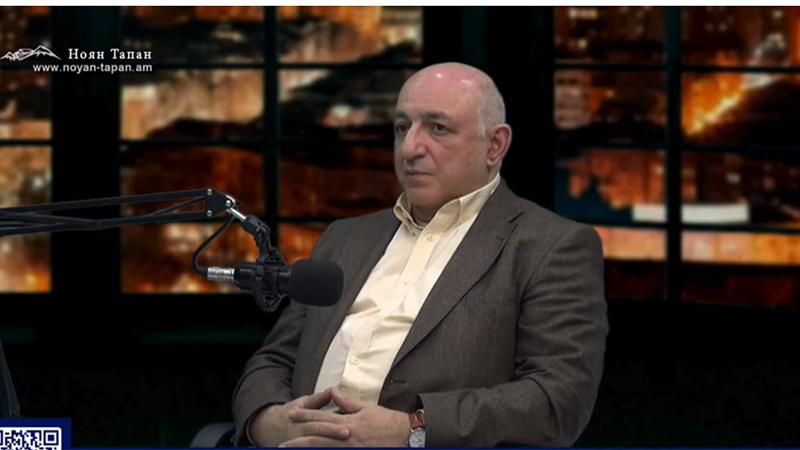
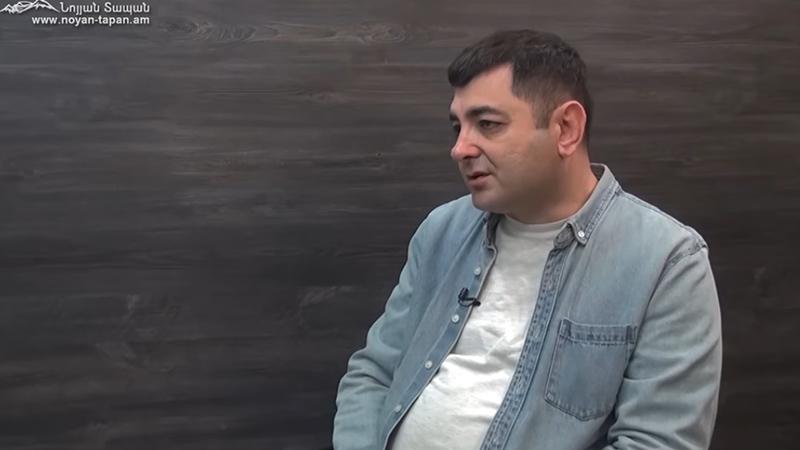
As the international community observes the United Nations’ Human Fraternity Day, the South Caucasus finds itself at a pivotal juncture. In an interview with "Noyan Tapan," political scientist Davit Stepanyan, an expert from the Armenian Institute of International and Security Affairs, dissected the complex layers of the ongoing peace process between Armenia and Azerbaijan, the shifting influence of global powers, and the internal political struggles shaping the nation's future.
The backdrop of the current diplomatic flurry is the Zayed Award for Human Fraternity, set to be presented to the leaders of Armenia and Azerbaijan in Abu Dhabi. The award recognizes the preliminary steps taken toward a peace treaty and cooperation. While some domestic critics view the gesture with skepticism—arguing that peace with the current Azerbaijani regime is neither sustainable nor dignified—Stepanyan offers a more pragmatic view.
"I don't think the sheikhs of the UAE have ambitions for power in Armenia," Stepanyan noted, suggesting that international actors are approaching the process from a position of realism. He attributed much of the domestic pessimism to political factions seeking regime change, noting that peace, security, and economic development are the primary pillars of the current government's platform.
Despite the volatility of the region, Stepanyan asserts that a "war agenda" does not currently exist. Both Yerevan and Baku have shown a commitment to the peace process, though for different reasons. While Armenia’s motivation is clear, Stepanyan credits United States intervention for Baku’s recent restraint.
According to the analyst, Washington has effectively communicated to President Ilham Aliyev that a new war—or any attempt to "swallow" Armenia in coordination with Russia—would not be tolerated as it contradicts U.S. regional interests. Consequently, Aliyev has pivoted toward a "new deal" involving Western mediation, a shift Stepanyan views with cautious optimism.
The Iran Factor: A Potential "Force Majeure"
The most significant threat to this stability, Stepanyan warns, is the possibility of a large-scale regional conflict involving Iran. While localized U.S. strikes on Iranian nuclear facilities might not directly endanger Armenian interests, a full-scale ground operation would be catastrophic.
He described a "boiling pot" scenario where regional actors, including Turkey-backed proxy groups or Azerbaijan, could become embroiled in a protracted conflict. "We have a border," Stepanyan reminded, emphasizing that such a destabilization would destroy the current peace trajectory. Currently, however, Iran appears to be seeking a diplomatic exit by negotiating aspects of its nuclear program through Russian mediation to avoid further escalation with Washington.
Addressing the role of Russia, Stepanyan was blunt regarding the effectiveness of the 102nd military base in Gyumri. He argued that the base has never provided actual security for Armenia, notably remaining passive during the 2021-2022 border escalations.
"It only provides symbolic security for the Russia-NATO border," Stepanyan stated, adding that Russia’s primary remaining tool is "soft power" aimed at manipulating Armenian public opinion ahead of elections. He warned that if pro-Russian forces return to power, the country risks being dragged back into a political "swamp" that could mirror the tragic fate of Artsakh.
The Path Forward: Democracy vs. Monopolies
Looking toward the future, the political scientist emphasized that the upcoming elections will be the ultimate test of Armenian sovereignty. He advocated for a parliament that facilitates genuine political debate and compromise, rather than one defined by "monopolistic" power or a "pro-Russian" opposition that refuses to engage in constructive governance.
"I want normal political forces in parliament... that will force the government to reckon with their positions and limit its power," Stepanyan concluded. "This is what democracy is"





 РУССКИЙ
  Հայերեն
 English
 Դաս. հայերեն
 French