Between Caution and Hope: Boris Navasardyan on the Fragile Path to Peace
10-02-2026 13:02:51 | Հայաստան | Վերլուծություն
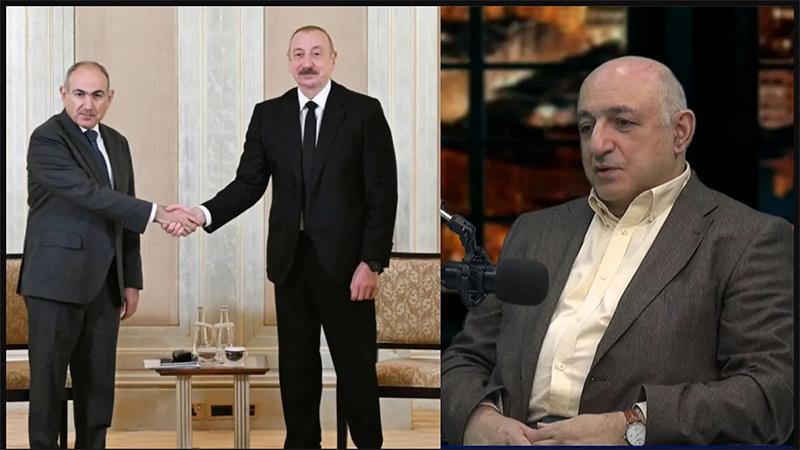
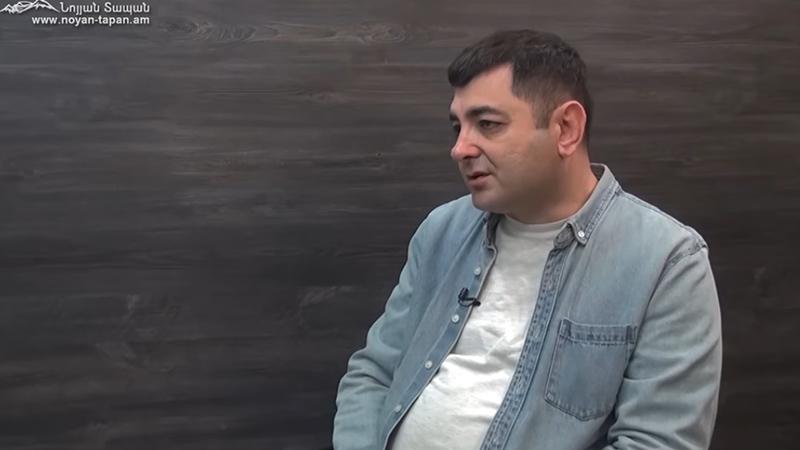
In a recent broadcast of “Noyan Tapan”, political analyst Boris Navasardyan offered a candid assessment of the shifting dynamics between Armenia and Azerbaijan. Following the recent meeting in Abu Dhabi, where Prime Minister Nikol Pashinyan and President Ilham Aliyev were awarded the Zayed Award for Human Fraternity, Navasardyan discussed the nuances of the peace process, the "War or Peace" electoral narrative, and the diminishing role of Russia in the South Caucasus.
Despite the accolades in Abu Dhabi, the atmosphere remains fraught. Navasardyan observed that while "wariness" is an accurate description of current relations, "puzzlement" or "concern" might be more fitting.
"Watching the footage of the two delegations meeting, one could see a certain concern and tension on their faces," Navasardyan noted. This suggests that while there is positive momentum—evidenced by softer rhetoric from Azerbaijani leadership compared to months prior—many issues remain unresolved. A specific irritant remains the concept of "Western Azerbaijan," which continues to receive state budget allocation in Baku, causing anxiety within the Armenian public.
Economic competition is also emerging as a new frontier. Navasardyan highlighted a "healthy competition" for US investment, particularly regarding data centers, where the US views Armenia as a primary partner, though Azerbaijan also seeks a role . However, geopolitical friction persists; while Armenia seeks closer ties with the EU, Azerbaijan views EU policy with skepticism, criticizing recent bilateral agreements between Brussels and Yerevan.
As Armenia approaches parliamentary elections, the narrative of "War or Peace" has become a central campaign theme.
Navasardyan argues this binary is slowly fading from the agenda as the focus shifts to the parameters of peace.
Crucially, he predicts a high probability that a peace agreement could be signed—though not ratified—before the Armenian elections.
"There is an understanding in both Baku and Yerevan that the movement toward final ratification must be divided into several phases," he explained.
•Phase 1: Agreement on the text.
•Phase 2: Renunciation of force (Abu Dhabi statement).
•Phase 3: Initialing the agreement (Washington).
•Phase 4: Signing the document at the executive level before elections.
•Phase 5: Final ratification by the newly elected parliament.
Navasardyan believes the publication of a new Armenian Constitution draft, devoid of territorial claims against Azerbaijan, could facilitate this signing. He emphasized that decoupling the constitutional referendum from Azerbaijani demands is vital for domestic legitimacy. "If we vote for the constitution only for the sake of Azerbaijan, and not for ourselves, it creates a problem," he warned.
Boris Navasardyan, representing the Yerevan Press Club, has been actively involved in "Track II" diplomacy, including reciprocal visits between Baku and Yerevan. He described these not merely as formal meetings but as genuine attempts to find solutions.
"We have passed the stage of creating symbols," he said, referencing the symbolic landing of an Azerbaijani plane in Yerevan and vice versa. The dialogue is now moving toward practical issues, such as how to facilitate banking transfers and business interactions in the absence of diplomatic relations. The format is expanding from a narrow "5+5" group to include more experts, journalists, and potentially business figures.
The US Factor and the Vance Visit
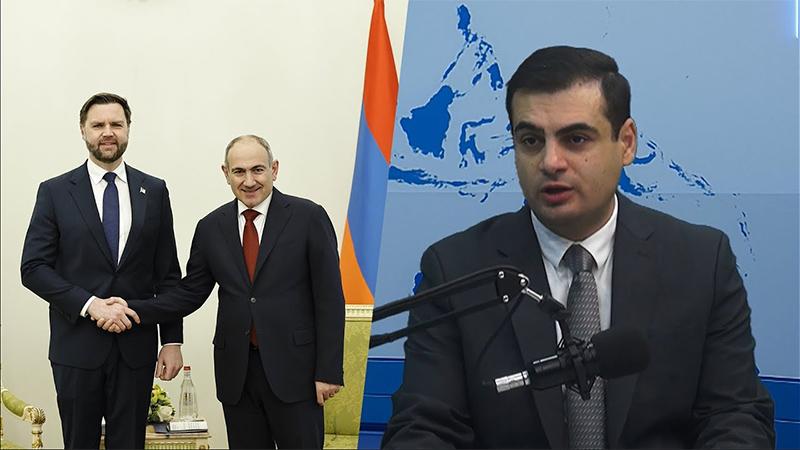
Discussing the upcoming visit of US Vice President JD Vance (referenced in the context of August 8 agreements), Navasardyan outlined a clear agenda:
•Technology: Semiconductors and AI.
•Energy: Modular nuclear power plants.
•Communications: Unblocking transport routes.
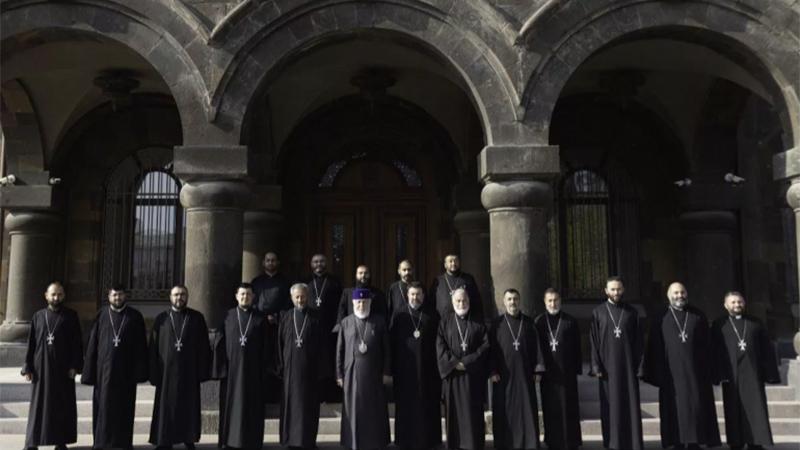
Venturing into speculation, Navasardyan suggested the Vice President might seek a "humanitarian win," such as the release of Armenian detainees in Azerbaijan. He also hypothesized a potential mediation role regarding internal Armenian tensions: "Why not try to reconcile the Catholicos of All Armenians with the Prime Minister? ... Not to resolve all problems, but to outline a roadmap" for constructive engagement.
The interview concluded with a stark analysis of Russia’s waning influence. Navasardyan argued that Russia has lost its "attractive power" and now relies on force or its role as a conflict broker to maintain relevance.
"For Russia, it is very important that the government of Armenia be as weak as possible," Navasardyan asserted, suggesting Moscow aims to keep Yerevan susceptible to influence.
Responding to Foreign Minister Lavrov’s recent statement that Moscow "does not abandon its traditional allies," Navasardyan dismissed it as a reassertion of a "Russian world" sphere of influence—a concept Armenia is increasingly resisting. He contrasted this with the US approach, which relies on being an "attractive partner" to both Armenia and Azerbaijan, effectively rendering the need for a Russian broker obsolete.
On the topic of energy integration, Navasardyan clarified that while talk of "unifying" energy systems has occurred, "connection" is the more accurate and realistic term, allowing for transit and emergency exchange rather than full policy integration.


 ՀԱՅԵՐԵՆ

 Русский
 English
 Դաս. հայերեն
 French