Beyond the Battlefield: Is Trump Preparing a Historic February Surprise in the Caucasus?
18-02-2026 12:22:39 | Հայաստան | Հարցազրույցներ
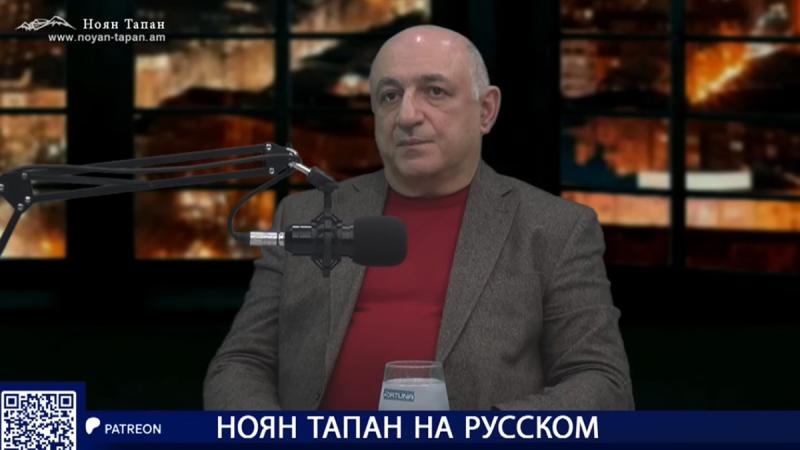
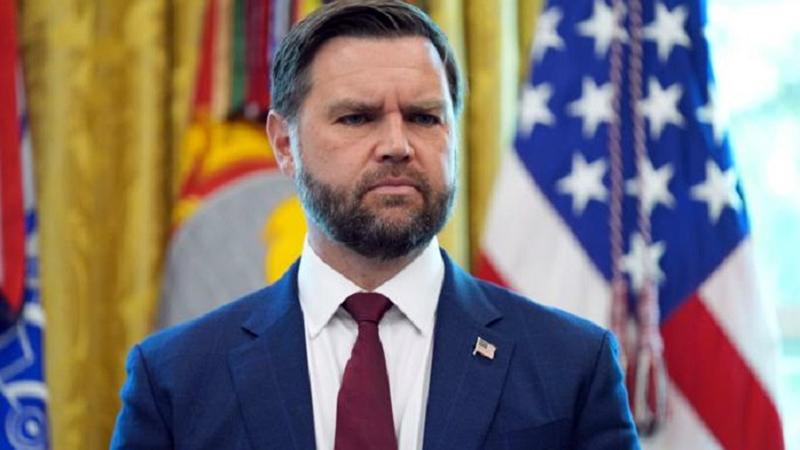
In a recent broadcast of Noyan Tapan, political analyst Boris Navasardyan sat down with host Gayane Arakelyan to dissect the geopolitical ripples following U.S. Vice President JD Vance’s high-profile visit to Armenia and Azerbaijan. The discussion painted a picture of a region at a historic crossroads, where the shadow of military conflict is being replaced by the sharp elbows of economic and technological competition.
According to Navasardyan, the primary beneficiary of this diplomatic flurry is not found in the Caucasus, but in Washington. The visit served as a foundational step for the Trump administration, specifically ahead of the inaugural meeting of the Peace Council scheduled for February 19.
Trump’s objective appears to be securing a definitive foreign policy "win". Speculation remains high regarding what this "event" might be:
•The Bold Scenario: A formal peace agreement and the establishment of interstate relations between Armenia and Azerbaijan.
•The Modest Scenario: The realization of the agreement between Armenia and Turkey to open borders for diplomats and third-country citizens.
While the visit's technical content might not have required such high-level representation, the presence of the Vice President served as a catalyst, encouraging both nations to meet U.S. expectations.
Symmetry as Diplomacy
A defining feature of the Vance visit was a rigorous commitment to symmetry. From the lack of official escorts at national memorials to the carefully balanced rhetoric, the U.S. administration sought to avoid any perception of favoritism between Baku and Yerevan.
Navasardyan noted a subtle "win" for Armenian sovereignty in the optics of the leaders' speeches. While Azerbaijani President Ilham Aliyev delivered his press remarks in English, Armenian Prime Minister Nikol Pashinyan chose to speak in his state language. This choice, Navasardyan argued, projected a stronger sense of national identity compared to Aliyev's preference for English on his own home soil.
From Military Conflict to "Tech Rivalry"
Perhaps the most significant shift discussed on Noyan Tapan was the transition of the South Caucasus from a stage of military confrontation to one of "transactional" competition. The U.S. is signaling a willingness to cooperate with both nations in cutting-edge fields:
•Defense: The U.S. is beginning to provide reconnaissance drones to Armenia, signaling a gradual lifting of previous "taboos" regarding military aid to a CSTO member.
•Energy: Washington is offering modular nuclear reactor technology to both countries, a move that has drawn sharp criticism from Russia’s Maria Zakharova, who claims these "paper" technologies are unproven.
•Technology: Discussions are underway regarding AI development and data centers.
However, Navasardyan warned that Armenia faces a "serious challenge" as Azerbaijan has already begun preliminary work with major investors like the UAE and Israel. Armenia, conversely, remains heavily dependent on U.S. support and the individual contributions of its diaspora, such as Nvidia’s Rev Lebaredian.
The Russian and Iranian Factors
Russia's influence in the region is facing a triple threat: security, transport, and now energy. As the U.S. pushes modular reactors, Moscow is fighting to maintain its dominant position in the Armenian energy sector, which is currently anchored by Russian technology and ownership of the Hrazdan power plant.
Meanwhile, the Iranian axis remains active. A "comprehensive document on strategic cooperation" is expected to be signed between Armenia and Iran in 2026, marking a "maturity" in their relationship.
A New Regional Identity?
The interview concluded with a look at the very definition of the "South Caucasus". Navasardyan emphasized that while the term was historically defined in relation to Russia, a new trilateral dynamic between Armenia, Azerbaijan, and Georgia is essential for the region's survival.
"We are moving from a stage of conflict to a stage of competition," Navasardyan summarized. While this is a far more stable reality than war, it promises a future that is no less demanding for the leaders in Yerevan and Baku.


 ՀԱՅԵՐԵՆ

 Русский
 English
 Դաս. հայերեն
 French