The Continuity of the Armenian Highlands: Sumerian as the "Golden Age" of the Armenian Language
31-03-2026 19:15:37 | Հայաստան | Հարցազրույցներ
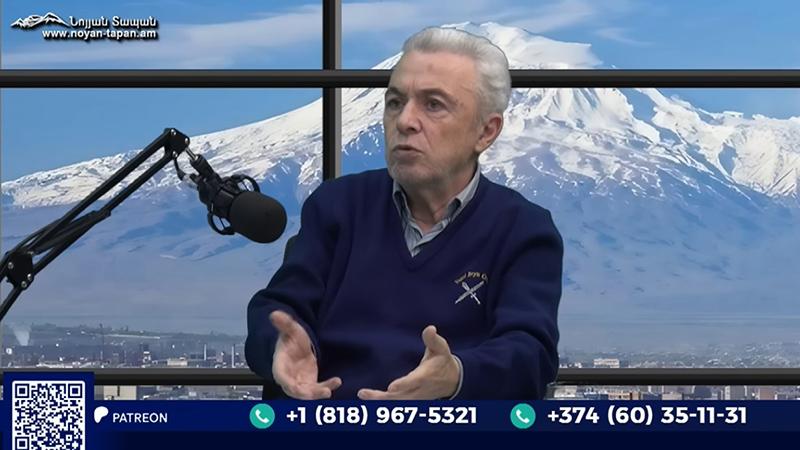
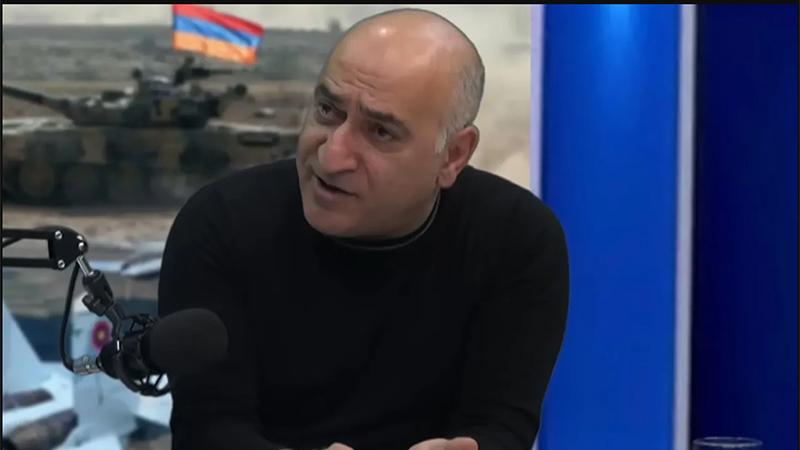
In a series of profound interviews on "Noyan Tapan," Sumerologist Armen Davtyan presented a transformative perspective on the origins of Armenian culture. His research challenges centuries of established historiography, suggesting that the Sumerian language is not an isolated "enigma," but rather an ancient stage of the Armenian language itself.
1. The Geopolitical "Trap" and the Distortion of History
The conversation began by addressing why the deep antiquity of Armenian culture was often obscured. According to Davtyan, this was not merely a scientific oversight but a calculated geopolitical strategy during the Cold War.
The "Anatolia" Substitute: To neutralize Soviet territorial claims against NATO-member Turkey, Western and Soviet historians began replacing the term "Armenian Highlands" with "Eastern Anatolia."
The "Immigrant" Myth: By labeling the Kingdom of Urartu as "non-Armenian," historians attempted to portray Armenians as latecomers who occupied a land that wasn't theirs.
However, Davtyan asserts that modern genetics and archaeology prove otherwise: there is no cultural or biological break between the Urartian period and the subsequent Armenian eras. It is a single, evolving civilization.
2. Linguistic Keys: Why Sumerian Needs Armenian
The crux of Davtyan's research is the linguistic identity between Sumerian and Armenian. He argues that Sumerian is essentially the Armenian language of the 30th century BCE.
"Sumerian does not exist separately from Armenian. Just as the 5th-century Grabar (Classical Armenian) is Armenian, so too is the language of the 30th century BCE."
The "Silent" Nuances
Davtyan highlights "blind spots" where world-renowned Sumerologists fail to translate texts accurately because they lack Armenian linguistic intuition:
The Case of "Kes" (Half/Some): In Sumerian, the word Kesi is translated as "half." However, in certain epic contexts, "half" makes no sense. In Classical Armenian, Kes also means "some" (e.g., "some said this, others said that"). Using this Armenian nuance suddenly makes the ancient texts coherent.
The Particle "Mi" (One): Sumerian texts often use the number "1" before words like "wailing" or "laughter." While foreigners struggle with a literal translation, an Armenian speaker immediately recognizes the common idiom "Mi lats, mi voghb" (such a wailing, such a crying), where "one" acts as an intensifier.
The "Deg/Degh" Shift: Akkadian transcriptions of Sumerian often use a "G" where Armenian uses a "Gh." For instance, the word for ointment/medicine appears as Deg, which is phonetically identical to the Armenian Degh.
3. Aratta: The Cradle of the Highlands
Davtyan has spent years translating the "Aratta Cycle"—four epic poems dating back to the 29th–27th centuries BCE. These are the oldest known literary works of humanity, predating Homer’s Iliad by two millennia.
Geographical Certainty: The epics describe Aratta as a mountainous land located upstream of the Tigris and Euphrates rivers. This description fits only one location on Earth: the Armenian Highlands.
Cultural Superiority: While Mesopotamia (Uruk) was a wealthy urban center, it lacked stone and minerals. The Lord of Uruk looked to Aratta for master builders, architects, and precious metals.
The "Fair Milk" of Aratta: In a stunning detail, the Lord of Uruk, Enmerkar, repeatedly justifies his legitimacy by stating he was born in Aratta and "drank the fair milk of Aratta." This suggests that the ruling dynasties of both Sumer and Aratta shared the same ancestral roots and language.
4. Breaking the International Silence
Despite the compelling evidence, why is this not global knowledge? Davtyan points to a professional divide: international Sumerologists do not know Armenian, and most Armenian linguists are not trained in Sumerology.
To bridge this gap, Davtyan is finalizing the translation of the complete Aratta Cycle and is launching a "Global Scientific Offensive."
Digital Lexicon: He is developing an evolving electronic Sumerian-Armenian dictionary.
International Outreach: Starting this year, his research will be published in English and presented at international conferences to provide the global community with the "Armenian Key" to understanding the ancient Near East.
Conclusion
The study of Sumerian is no longer a peripheral interest; it is a vital component of Armenian history. By reclaiming this heritage, we do not just look at the past—we find the roots that sustain the Armenian identity as it moves toward the future.


 ՀԱՅԵՐԵՆ

 Русский
 English
 Դաս. հայերեն
 French