Between Ashes and Fire: Gurgen Simonyan on Armenia's Political Crossroads, National Identity, and the 2026 Elections
27-04-2026 16:42:24 | Հայաստան | Հարցազրույցներ
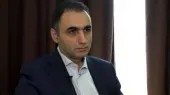
YEREVAN — In a comprehensive interview hosted by Noyan Tapan, Gurgen Simonyan, Chairman of the Shnorhapetakan (Meritocratic) Party of Armenia and Candidate of Political Sciences, offered a sharp critique of the country’s current political landscape, geopolitical challenges, and impending electoral battles. As Armenia prepares for the crucial elections scheduled for June 7, 2026, Simonyan positioned his newly formed party as a vital alternative to the ruling Civil Contract party, warning against the erosion of national identity and democratic norms.
The Pre-Election Landscape and Financial Hurdles
The political arena in Armenia remains highly unstable and underdeveloped, marked by a confusion of roles and statuses among political actors. According to Simonyan, former ruling parties should ideally rely on their past accomplishments and statistical evidence of their work during campaigns. However, the lack of such political capital forces new forces, like the Shnorhapetakan Party, to travel extensively to regions and communities to present their vision directly to a dissatisfied electorate seeking alternatives.
Simonyan detailed his party's rapid development, noting it was initiated on May 28, 2024, and officially registered as a political force by April 10, 2025. Addressing media scrutiny regarding the 7.5 million AMD state fee required to participate in the elections, Simonyan clarified the funding sources. He explained that the legislative framework is often designed to favor wealthy oligarchs, but his party successfully crowdsourced the required funds through personal savings, family contributions, and donations from supportive citizens.
"Our main competitor at this moment is the Civil Contract party, which unfortunately still has a tremendous amount of capabilities," Simonyan stated, dismissing claims from the "Strong Armenia" party that they are the government's primary target or a formidable rival. He noted that while the ruling party benefits from administrative resources, the Shnorhapetakan Party has already reached a 60-70% recognition rate among the public.
Governance, Fatigue, and the "1% Elite"
A central theme of Simonyan's critique was the failure of the 2018 revolution to capitalize on its promised values. He argued that even the best democratic governments should not remain in power for more than ten years. Addressing Prime Minister Nikol Pashinyan's potential ambitions to rule for twelve years, Simonyan remarked half-jokingly, "The Republic of Armenia is not the Federal Republic of Germany, and the first figure of the acting government is not Angela Merkel".
When asked whether the public bears responsibility for the country's trajectory—given their support for populist measures like pension increases—Simonyan staunchly defended the citizenry. He described the public as an "amorphous domain" and placed the burden of national preservation squarely on the shoulders of the country's "1% elite". This elite, comprising the military-political leadership, clergy, academics, and media, is responsible for transforming culture into a "ceremony of passing the fire" rather than merely "bowing to ashes".
Simonyan criticized the government for raising pensions by 10,000 AMD without explaining to the public that inflation and the declining purchasing power of money would soon negate the increase.
He also highlighted that these populist financial bumps were achieved by cutting essential defense and security expenditures.
Geopolitics and the "Cognitive War"
Turning to foreign policy, the Noyan Tapan host questioned the role of the European Union's civilian mission in Armenia and whether it inadvertently supports Pashinyan's administration. Simonyan firmly rejected this notion, asserting that "the European Union is not supporting the acting authorities, the European Union is supporting the Republic of Armenia". He praised the EU mission, stating that Europe is actively seeking alternatives in Armenia because the current government has organizational gaps in its pro-Russian stance compared to former authorities.
Furthermore, Simonyan diagnosed Armenia as being in the epicenter of a "cognitive war," encompassing disinformation, narrative warfare, and psychological operations. He condemned the current authorities for failing to establish robust informational defense structures, allowing the domestic internet and meta-space to be flooded with foreign influence, particularly from Russia and neighboring states.
Addressing the broader existential threat posed by the Turkish-Azerbaijani alliance, Simonyan did not mince words regarding the systematic destruction of Armenian heritage, including the demolition of the Holy Mother of God Cathedral in Stepanakert. He accused the Armenian government of retreating into basic, instinctual survival—prioritizing the stomach and reproductive instincts over the brain and soul.
"Since 2020, Armenianness has been destroyed over a space of 11,000 square kilometers," Simonyan lamented, warning that cutting ties with the nation's past and identity undermines the very foundations of the state.
In a concluding, definitive stance, Simonyan declared that the Shnorhapetakan Party is categorically opposed to altering the preface of the Armenian Constitution and eliminating the Declaration of Independence.


 ՀԱՅԵՐԵՆ

 Русский
 English
 Արեւմտահայերեն
 French