The Border Illusion: Decoding Ankara’s Regional Strategy
20-05-2026 17:19:36 | Հայաստան | Հարցազրույցներ
For decades, the iron curtain separating Armenia and Turkey has stood as one of the most stubborn remnants of twentieth-century geopolitics. Recently, however, rumors of diplomatic movement have rippled through Yerevan following a formal announcement from Ankara stating that technical preparations for direct trade with Armenia have reached completion. Yet, the physical border checkpoints remain strictly closed, leaving citizens and merchants to navigate a confusing paradox: how does one prepare for direct commerce across a sealed frontier?
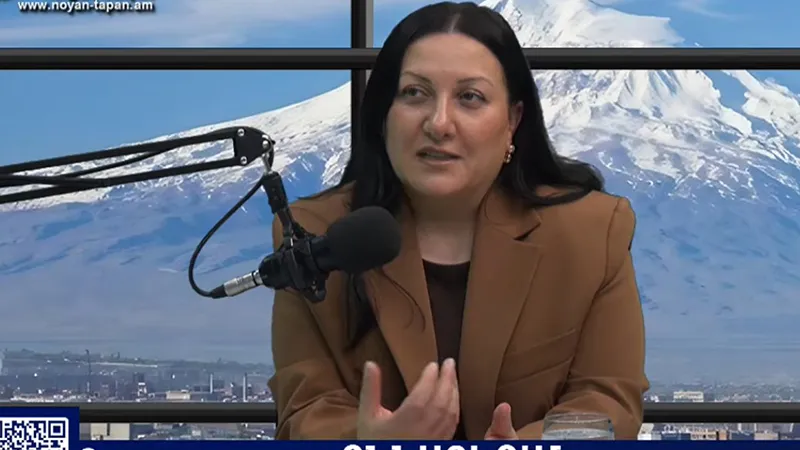
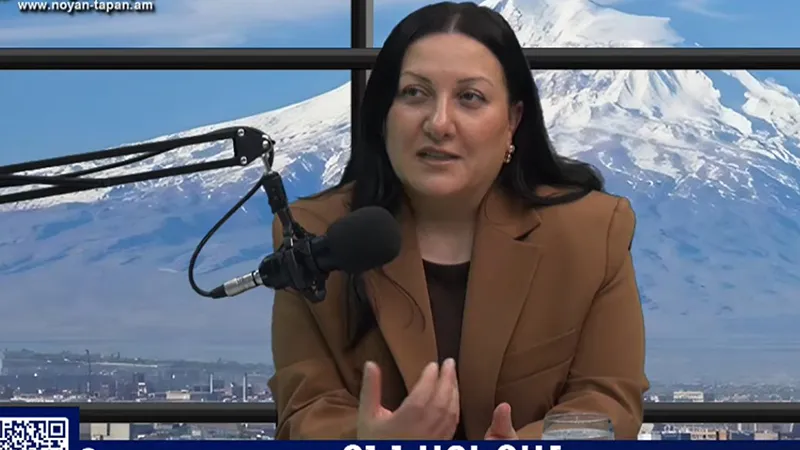
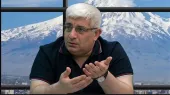
To dissect the geopolitical calculations behind this move, the Noyan Tapan TV program hosted Nelli Minasyan, a prominent Turkologist and Head of the Department at the Institute for Armenian Studies at Yerevan State University. Minasyan warns against mistaking technical trade paperwork for an imminent diplomatic breakthrough.
Decoding the Bureaucratic Shift
For years, the absence of open borders did little to completely stop the flow of Turkish goods into Armenian markets. From textiles to retail giants like LC Waikiki, Turkish brands have long been common fixtures in Yerevan. However, this trade has strictly relied on third-party corridors—primarily transit through Georgia.
Under the existing system, Turkish exporters could never legally list Armenia as the final destination on shipping manifests; instead, cargo was registered under Georgia's country code. According to Minasyan, Ankara's recent announcement is essentially a bureaucratic realignment rather than a physical opening of the border.
"In my opinion, this does not concern the opening of the border for the time being," Minasyan explained during the Noyan Tapan broadcast. "It means goods can still arrive via Georgia, but the final country code listed will explicitly be Armenia. Direct trade and the physical opening of a border are entirely separate matters".
While the immediate economic impact of this logistical change remains minor, Minasyan notes that the dialogue surrounding normalization has subtly evolved within Turkish intellectual and analytic circles. Analysts and experts who historically opposed reconciling with Yerevan are now advocating for the relationship, shifting their arguments toward pragmatic economic incentives.
The View from the Border Provinces
The push for open checkpoints is felt most acutely in Turkey’s underdeveloped eastern provinces. Geographically isolated from the booming industrial hubs of western Turkey, these border regions have suffered economically from the decades-long blockade.
"Eastern Turkey's interactions are highly restricted," Minasyan noted, pointing out that local populations and regional administrators frequently use social media to lobby for open borders to give their economies room to breathe. "They are largely in favor of opening the borders to establish trade and economic relations".
Despite local enthusiasm, the ultimate decision does not rest on local economic needs. "In Turkey, all issues are tied to political decisions made exclusively by the President, Recep Tayyip Erdoğan, and his tight inner circle," Minasyan emphasized.
The Shadow of Baku and the Trilateral Dynamic
A major point of contention in Armenian political discourse is the extent to which Turkey’s foreign policy is constrained by its alliance with Azerbaijan. Public perception often suggests that Ankara is economically dependent on Baku or held back by its wishes. Minasyan explicitly pushes back against this narrative.
Data published by the Turkish Statistical Institute shows that Azerbaijan does not even rank among Turkey's top ten import partners—a list led by global giants China and Russia. While Azerbaijan provides critical energy resources to Turkey and invests via its state oil company, SOCAR, the bedrock of the Ankara-Baku axis is fundamentally political and strategic, codified in agreements like the 2021 Shusha Declaration.
"I absolutely disagree with the impression that Ankara is constrained by Baku’s whims in its foreign policy," Minasyan stated. "Ankara is an impulsive, highly active player on the international stage aiming for grander strategic goals. Baku does not dictate terms to Ankara; rather, Turkey’s and Azerbaijan’s strategic goals regarding Armenia align perfectly. It is a Turkish strategy, and Azerbaijan fits seamlessly into that broader vision".
Consequently, even minor technical steps are closely coordinated between the two capitals. Judging by the rhetoric of Turkish officials, the actual political decision to unlock the border gates will remain frozen until a formal comprehensive peace treaty is signed between Armenia and Azerbaijan.
Building Trust from the Bottom Up
Despite the diplomatic deadlock, a pragmatic foundation for future relations is quietly being laid by ordinary citizens. Small-scale merchants and shuttle traders have managed to build a functional layer of interpersonal trust across the divide.
While Armenia primarily imports finished Turkish textiles, a quiet stream of raw materials, such as leather, flows back from Armenia into Turkey. These transactions are often executed entirely on verbal agreements and informal networks without formal legal frameworks.
"My research shows that a certain level of mutual trust already exists among ordinary people," Minasyan concluded. "If these small-scale traders, who operate without formal legal backing, can maintain successful partnerships based purely on verbal trust, then large-scale businesses will likely cooperate even more effectively once given the official green light".
For now, the technical green light for "direct trade" serves as a reminder of what is possible. However, until the overarching political issues in the South Caucasus are untangled, the actual physical gates connecting the two nations will remain firmly shut.


 ՀԱՅԵՐԵՆ

 Русский
 English
 Արեւմտահայերեն
 French