The Anatomy of Fear: Political Manipulation and the Post-War Armenian Reality
20-05-2026 19:00:26 | Հայաստան | Հարցազրույցներ
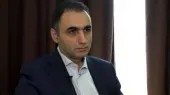
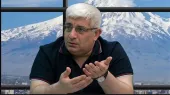
In an era defined by political uncertainty, the political discourse in Armenia has increasingly transformed into an arena where policy debates are sidelined by a more potent currency: fear. During a recent broadcast on Noyan Tapan, host Ani opened a poignant discussion with Tatul Hakobyan, a prominent journalist and founder of the Ani Research Center, exposing the unsettling mechanics of Armenia’s current electoral environment. Together, they charted how a nation traumatized by devastating conflict is being systematically managed through geopolitical anxiety and existential threats.
The Pre-Electoral Currency of Terror
The dialogue began by analyzing the fundamental tone of Armenia’s pre-electoral space. Rather than presenting competing visions for economic development, institutional reform, or societal progress, political factions have reverted to weaponizing public anxiety.
"It seems to be a competition of fears," the Noyan Tapan host observed, pointing out that political candidates appear more invested in terrifying the electorate into rejecting their opponents than in demonstrating their own merits. Instead of substantive policy platforms, the public is treated to mudslinging and apocalyptic warnings.
Hakobyan responded by anchoring this phenomenon in the devastating reality of Armenia’s recent history. He argued that the current administration heavily relies on a singular, potent rhetorical leverage point: the threat of an imminent war if they are removed from power.
"I believe Pashinyan uses this playing card because we have suffered a terrible defeat," Hakobyan explained. He reflected on how, for over thirty years, Armenians lived with the collective psychology of possessing the most powerful military in the region. The catastrophic aftermath of recent conflicts forced a brutal awakening. "The Armenians... have come down to earth and seen what defeat truly is. And they didn't see that defeat from afar or in movies; they saw it when the body of their deceased son was brought to their home."
According to Hakobyan, this psychological wound—which he describes as the most catastrophic disaster the Armenian people have faced since the Genocide—is being actively weaponized by domestic authorities against their own citizens. "This is a way of terrorizing one's own people, and it is an unacceptable approach," Hakobyan stressed, noting how damaging it is to constantly remind a society that is just beginning to heal and "return to life" that a vote against the incumbent is a vote for death and destruction.
The Illusion of Peace and the Constitutional Trap
A central theme of the discussion was the fragile and conditional nature of the peace currently being offered to the Armenian public. Hakobyan noted with deep concern that the signing of a final peace treaty with Azerbaijan has become dangerously intertwined with domestic political processes—specifically, the pressure to hold a referendum to alter the Armenian Constitution and remove references to the Declaration of Independence.
"A very dangerous thing has been done," Hakobyan warned. "We have tied our internal voting to the final signing of the peace treaty with Azerbaijan."
This creates a perilous, no-win situation for the Armenian electorate. If citizens vote to alter the constitution under external pressure, it signals that Azerbaijan can dictate Armenia’s internal legal framework. Conversely, if the public rejects the changes, Baku is handed a convenient casus belli. "It gives Azerbaijan a new opportunity or pretext for war, allowing them to claim, 'See, you continue to present territorial demands, therefore we will start a war against you,'" Hakobyan explained.
When pressed by the Noyan Tapan host on whether Baku would definitively launch an invasion if rejected, Hakobyan clarified that Azerbaijan's calculus is not driven by emotion, but by tactical certainty. "Azerbaijan will start a war in the event that it is absolutely certain it will win that war, just as it was certain during the 2020 war," he stated.
Changing the Cost of War: Diplomacy Over Wishful Thinking
Despite the grim domestic outlook, Hakobyan noted that the geopolitical cost of a new war has risen significantly for Azerbaijani President Ilham Aliyev. Armenia's deepening ties with the European Union, the deployment of civilian monitoring missions, and the active involvement of the United States have altered the diplomatic landscape. Additionally, Hakobyan expressed hope that Armenia has begun to restore its military balance.
However, Hakobyan issued a stern warning against the historical Armenian tendency to rely blindly on foreign powers for salvation, only to descend into bitter disillusionment when those powers prioritize their own national interests. Citing historical precedents from 1920 and 1921 involving Russia, France, and Great Britain, he noted that foreigners do not "betray" Armenia; rather, Armenia betrays itself through poor calculations.
"The foreigner has their own interest, and it is we who made the wrong calculation," Hakobyan asserted. He emphasized that a nation's security cannot depend on a single state whose interests may fluctuate tomorrow. Instead, true security requires a comprehensive synergy: a capable military, a healthy society, a strong economy, and robust bilateral and multilateral diplomacy.
The Foreign Preference for Continuity
In a final analysis of the political landscape, Hakobyan addressed the troubling paradox of why external adversaries seem invested in the political survival of the current Armenian administration.
"I will reveal no secret if I say that both Azerbaijan and Turkey wish for Nikol Pashinyan to remain in power in Armenia," Hakobyan stated candidly. "Because they have received what they wanted... and they need what they have received to be documented in peaceful conditions. That is, to turn our de facto defeat into a de jure defeat."
Ultimately, the conversation on Noyan Tapan highlighted the profound responsibility of both the press and the public in navigating this landscape of manipulated anxieties. Hakobyan concluded with a reminder of the journalist's true calling: "Our profession is not about pleasing the public. Our profession is about presenting realities or analyses based on facts to the public as much as possible." For Armenia to secure its sovereignty, it must shed external illusions, reject the politics of manufactured terror, and base its future on a clear-eyed assessment of its actual capabilities.


 ՀԱՅԵՐԵՆ

 Русский
 English
 Արեւմտահայերեն
 French