Armenia Navigates Geopolitical Shift: Edgar Vardanyan on US Engagement, Russian Pressure, and Democratic Resilience
10-02-2026 16:44:45 | Armenia | Articles and Analyses
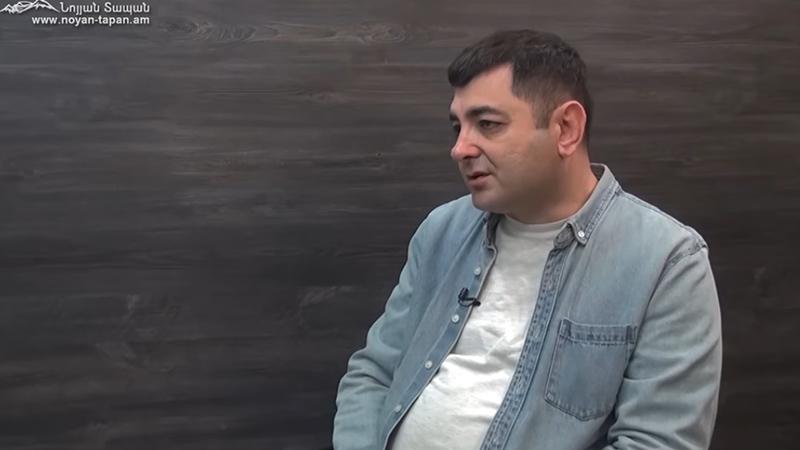
Amidst swirling reports of a high-profile visit by US Vice President J.D. Vance to the South Caucasus, political scientist and associated expert of the Armenian Council, Edgar Vardanyan, provided a comprehensive analysis of the shifting power dynamics in the region. In an interview with Noyan Tapan, Vardanyan discussed the implications of deepening US-Armenia ties, the diminishing leverage of the Kremlin, and the resilience of Armenia’s democratic course against hybrid threats.
The conversation was anchored by the anticipated visit of Vice President Vance to Armenia and Azerbaijan, potentially scheduled for early February. Vardanyan characterized the visit as a critical step in the "implementation" of a broader US engagement strategy, often referred to as the "Trump Trip" initiative.
According to Vardanyan, the agenda is expected to go beyond diplomatic pleasantries, focusing on the practical realization of the US-Armenia strategic partnership. Key areas of cooperation include nuclear energy and semiconductors, signaling a desire to elevate bilateral relations to a technological and economic level.
"The visit is aimed at breathing new life into the implementation of these agreements," Vardanyan noted, adding that the discussions would likely cover the signing of a peace treaty between Armenia and Azerbaijan. He emphasized that Washington’s mediation has been accepted by both Yerevan and Baku, a development that signifies a major geopolitical pivot as both nations engage directly or through US facilitation, bypassing traditional Russian mediation.
Moscow’s Waning Leverage and "Cold Calculations"
Addressing a recent statement by the Russian Foreign Ministry—which warned that Western intentions in the South Caucasus hide "cold calculations" aimed at harming Russia—Vardanyan described it as part of a long-standing narrative of imperial resentment. He argued that the current Russian political elite refuses to recognize the de facto independence of post-Soviet states, viewing the region as its exclusive "historical territory" and "sphere of influence".
Vardanyan posited that Moscow is losing its most potent tool for control: regional conflict. "The primary tool was the conflict between Armenia and Azerbaijan... This allowed Russia to manage the situation, helping one side then the other, selling arms to both," he explained. With Yerevan and Baku moving toward direct dialogue and Western-mediated agreements, the Kremlin is being stripped of its ability to act as the indispensable arbiter.
Furthermore, Vardanyan highlighted that Armenia’s democratic transition since 2018 has largely immunized it against Kremlin-backed political intervention. Because the Armenian people now determine their own government through competitive elections, Russia can no longer easily manipulate the political regime to ensure subservience.
While dismissing the likelihood of a successful coup d'état due to the low public support for pro-Russian opposition forces, Vardanyan warned that Moscow has pivoted to "hybrid threats".
"I exclude the possibility of turning back from the path chosen by the people," Vardanyan asserted, citing the clear public mandate for an independent, democratic state. However, he cautioned that Russia is employing disinformation, cyberattacks, and financial injections to destabilize the political field. The goal of these hybrid attacks, he argued, is to foster "political nihilism," making the public distrust all actors to pave the way for pro-Russian forces to exploit democratic tools for undemocratic ends.
The "Trump Factor" and Institutional Stability
Responding to concerns that Armenia might be betting too heavily on the unpredictable nature of Donald Trump or his administration, Vardanyan offered a pragmatic view rooted in US institutional interests. While acknowledging Trump’s eccentric rhetorical style, Vardanyan argued that US foreign policy is driven by state interests that transcend individual presidencies.
He emphasized that the proposed investments—described as a "consortium"—represent US state capital and infrastructure rather than personal patronage. "The United States, regardless of who is president, has an interest here," Vardanyan stated. That interest lies in ensuring the region does not fall under the sway of opposing geopolitical centers and remains open to profitable economic cooperation.
Vardanyan concluded that once economic interdependence and infrastructure projects are established—potentially on a 49-year timeline—they create a stable foundation that persists regardless of electoral outcomes in Washington. "The connections are being formed, and it is becoming profitable to cooperate rather than to be in conflict," he said.
Vardanyan also touched upon the delicate issue of Iran, asserting that Armenia’s deepening ties with the West should not be viewed as a threat to Tehran. He stressed that regional stability is in everyone's interest and that neither Armenia nor Azerbaijan can afford to be used as a launchpad for actions against Iran, as doing so would destabilize the very peace initiatives the US is trying to foster.





 ENGLISH
  Հայերեն
 Русский
 Դաս. հայերեն
 French