The American Pivot: JD Vance’s Upcoming Visit and the Reshaping of Armenia’s Geopolitical Future
10-02-2026 17:44:59 | Armenia | Articles and Analyses
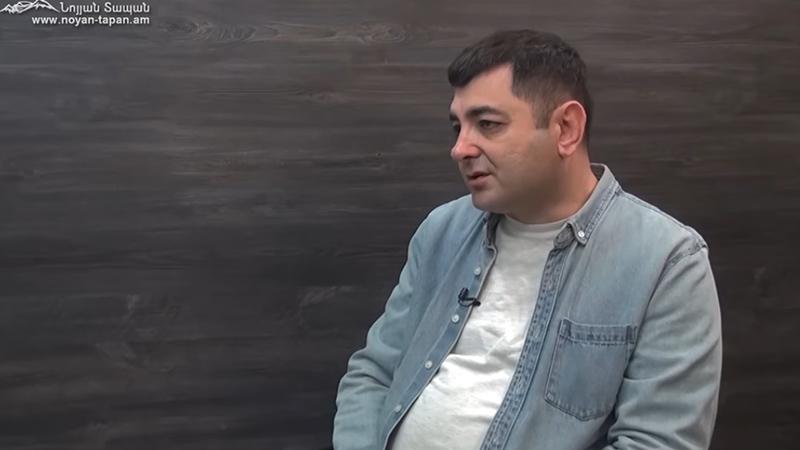
In a wide-ranging interview with Noyan Tapan, Arman Babajanyan, Chairman of the "For the Republic" Party, disclosed significant details regarding a burgeoning strategic partnership between Armenia and the United States. From a high-profile visit by U.S. Vice President JD Vance to massive infrastructure projects designed to replace Russian influence, Babajanyan outlined a roadmap for a dramatic shift in Armenia's foreign policy and economic architecture.
Babajanyan confirmed reports that United States Vice President JD Vance is scheduled to visit Armenia on February 9 . According to Babajanyan, who cited personal sources and social media announcements attributed to President Trump, the visit is part of a broader regional tour that includes a stop in Milan for the Winter Olympics opening ceremony before proceeding to the South Caucasus .
"The highest-ranking American official to ever visit Armenia was a Secretary of State... but for the first time, the Vice President of the United States is visiting," Babajanyan noted, emphasizing the historic nature of the event . The Vice President is expected to hold meetings with the Prime Minister, the President, and the Foreign Minister of Armenia .
The "TRIP" Project: Infrastructure as Independence
A central pillar of this new cooperation is the "TRIP" initiative, a framework agreement reportedly formed on January 13 between Armenian Foreign Minister Ararat Mirzoyan and U.S. official Marco Rubio . This project aims to establish a joint US-Armenia corporation to oversee major infrastructure developments .
Babajanyan revealed a specific focus on the 43-kilometer border section in Meghri . While the U.S. initially suggested Turkish contractors and Armenia proposed Chinese firms, a compromise was reached to employ a consortium of Arab construction companies to handle the development of roads, railways, and energy pipelines along the Iranian border .
"The Americans opposed [Chinese involvement]," Babajanyan stated, explaining that the project includes sensitive infrastructure such as fiber-optic cables and energy transit lines intended to turn Armenia into a regional transit hub .
Nuclear Energy and the Tech Shield
The partnership extends deeply into energy and technology, sectors Babajanyan views as vital security guarantees. He announced that the U.S. has been selected to build Armenia’s new nuclear capacity to replace the Metsamor Nuclear Power Plant after 2036 . The plan involves modular reactor technology, allowing for multiple units that would enable Armenia to export "green energy" to neighbors, including Turkey and Azerbaijan .
Furthermore, construction has reportedly begun in the Hrazdan region (Gagarin) on a semiconductor cluster and data centers aimed at making Armenia a regional hub for artificial intelligence . Babajanyan argues that American investment serves as a "security shield," noting, "Any encroachment or attack on Armenia becomes an attack on [America's] own stability and security" .
Severing Ties with Moscow
Babajanyan’s rhetoric was sharply critical of Russia, advocating for an immediate exit from the CSTO and the Eurasian Economic Union (EAEU) . He dismissed recent statements from the Russian Foreign Ministry regarding the importance of the Russian military base and border guards, calling them "laughable" given their inaction during the 2020 war and subsequent incursions into Armenian territory .
"We must cut the threads one by one," he asserted, arguing that Russian influence brings only "misfortune and disasters" . He also suggested that Armenia should nationalize its railway system, currently under Russian concession, citing the Russian operator's inability to fund necessary modernization due to debt .
The Iranian Equation
Addressing regional anxieties, Babajanyan acknowledged concerns from Tehran regarding Western presence near its border . However, he emphasized that the U.S. has instructed Armenian officials to communicate clearly with Iran that the border status will remain unchanged .
"Armenia's security is Iran's security," Babajanyan said, quoting late Iranian officials, and argued that a stronger, U.S.-backed Armenia ultimately benefits the Islamic Republic by stabilizing its northern neighbor .
Looking toward internal politics, Babajanyan positioned his party as an alternative for the "61% of the Armenian citizenry" who, according to polls, reject both the former regime and the current authorities . He frames the upcoming elections not just as a choice of individuals, but as a choice of geopolitical course—specifically, a definitive turn toward the West and a rejection of the "Russian-Turkish plan" for the region .
"Peace must bring prosperity," Babajanyan concluded, stressing that the path to real peace requires economic empowerment and security guarantees that he believes only the West can now provide .





 ENGLISH
  Հայերեն
 Русский
 Դաս. հայերեն
 French