The Mirage of Eternal Friendship: Aram Sargsyan Advocates for a Shift in Armenian Foreign Policy
17-03-2026 14:42:17 | Armenia | Interviews
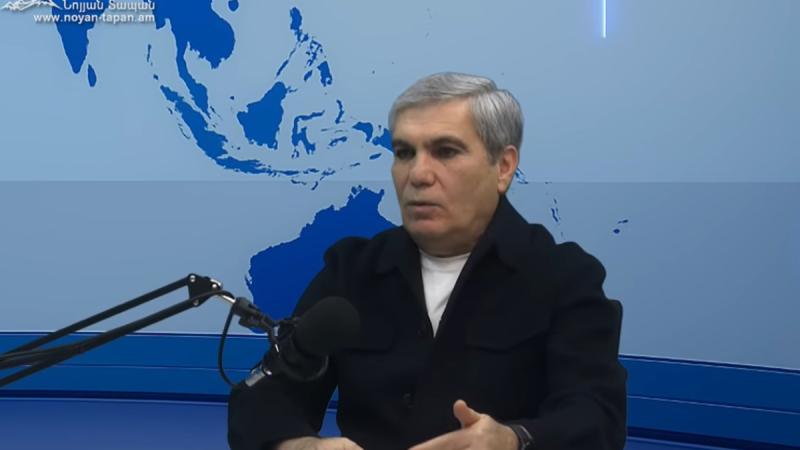
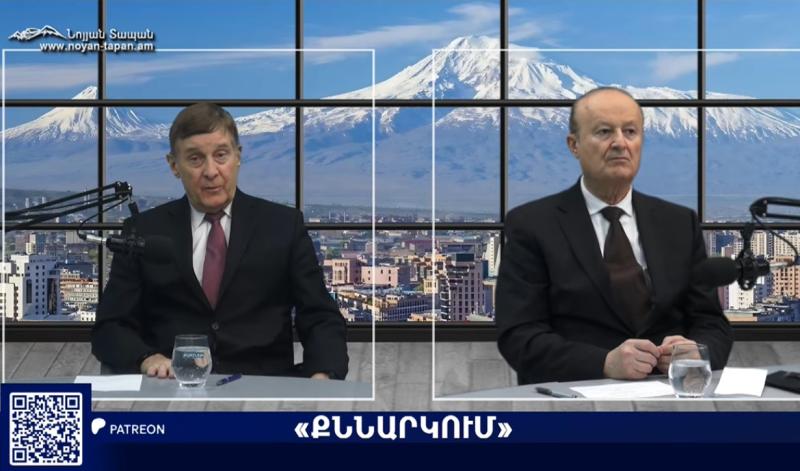
In a recent and extensive interview hosted by Noyan Tapan, Aram Sargsyan, leader of the Republic (Hanrapetutyun) Party, offered a sobering analysis of Armenia’s current geopolitical standing, challenging long-held dogmas about "fraternal" nations and regional alliances. Sargsyan’s discourse centered on a pragmatic, interest-driven approach to foreign policy, arguing that in the modern era, geography is no longer the sole arbiter of security.
Sargsyan opened the discussion by addressing Armenia's complex relationship with Iran. While many in Armenia view Iran as a steadfast "friendly" neighbor, Sargsyan urged for a more nuanced perspective. He pointed out that Iran’s past actions—such as congratulating Azerbaijan on its victory in Nagorno-Karabakh and labeling the region as historically Islamic territory—contradict the narrative of unconditional friendship.
"I generally do not believe there are 'friend' countries; I believe there are countries where our interests coincide," Sargsyan stated during the interview. He noted that while the interests of Tehran and Yerevan currently align regarding the preservation of the road through Syunik, this is a matter of strategic necessity rather than sentimental bond. Sargsyan further argued that a democratic, Western-oriented Iran would be the "true salvation" for Armenia, providing a 90-million-strong market and greater regional stability.
A significant portion of the interview was dedicated to Sargsyan’s critique of Armenia’s first president, Levon Ter-Petrosyan. Sargsyan argued that Ter-Petrosyan’s focus on regional powers like Russia, Iran, and Georgia is an outdated "14th-century" mindset.
Using a stark technological analogy, Sargsyan dismissed the idea that physical proximity is the only factor in modern warfare. "In the times of Omar Khayyam... if you traveled from Iran to India by caravan without stopping, it would take 120 days," he explained. "Today, if a missile is launched from India toward Iran—a distance of 3,000 kilometers—it reaches its target in 12 minutes". This reality, he argued, necessitates looking beyond immediate neighbors and diversifying Armenia's security and trade partners.
Addressing the domestic political scene, Sargsyan highlighted what he sees as a self-defeating cycle within the opposition. He noted that both "pro-Russian" and "pro-Western" camps inadvertently bolster Prime Minister Nikol Pashinyan by making him the central figure of every political debate.
According to Sargsyan, this polarization is an "electoral technology" that allows the current administration to maintain its grip on power. Whether the Prime Minister is seen as a Russian puppet or a Western agent, the constant focus on his persona—rather than on alternative policy proposals—ensures his continued electoral success.
The discussion concluded on the sensitive topic of the displaced population of Nagorno-Karabakh. Sargsyan acknowledged the deep-seated desire of the people to return to their homes but pointed out the lack of a viable international model to facilitate this.
He observed that while the West seeks a peace that prevents new wars, their model often implies the integration of Armenians into Azerbaijan with Azerbaijani passports—a prospect Sargsyan says is rejected by the displaced, including figures like Vitaly Balasanyan. Conversely, the Russian model remains equally uncertain for the long-term security of the Armenian population.
Throughout the interview on Noyan Tapan, Sargsyan’s message was clear: Armenia must move away from the search for a singular "savior" or "eternal friend". Instead, he advocated for a multi-vector policy that prioritizes trade diversification and strategic flexibility.
"We must diversify our foreign political ties... and not place our entire trade balance in one place," he concluded, framing this shift as the only way to mitigate the impact of regional conflicts on the Armenian state.





 ENGLISH
  Հայերեն
 Русский
 Դաս. հայերեն
 French