The Geopolitical Chokehold: Davit Shahnazaryan on the Looming Global Crisis in the Persian Gulf
23-03-2026 16:48:27 | Armenia | Interviews
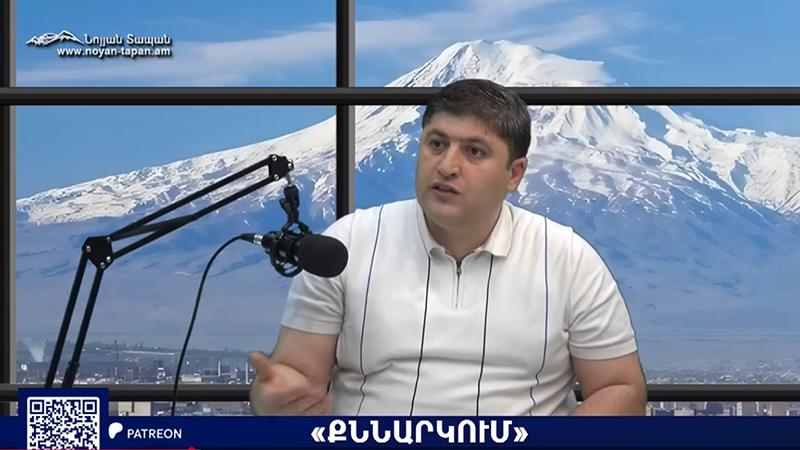
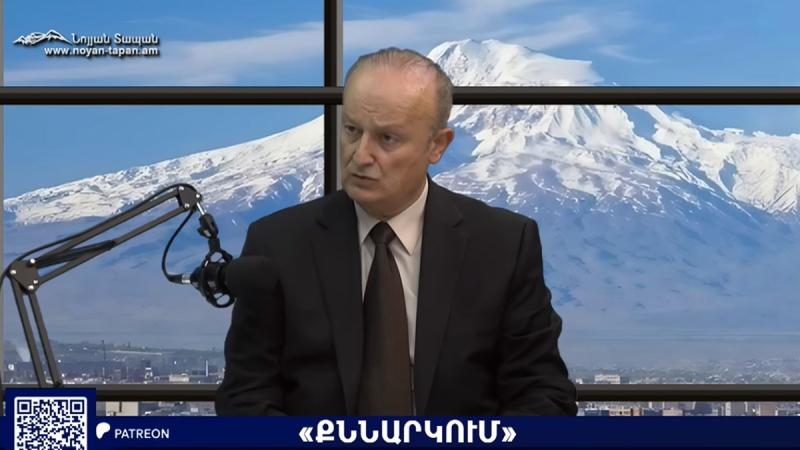
In an expansive and sobering interview on Noyan Tapan, political analyst Davit Shahnazaryan joined host Gayane Arakelyan to dissect the rapidly deteriorating situation between the United States and Iran. While the world watches the military maneuvers, Shahnazaryan warns that the true conflict has shifted into a devastating form of economic warfare, centered on a tiny strip of water that holds the world’s stability in the balance.
The interview opened with a stark assessment of recent Western military actions. Shahnazaryan revealed that the strikes against Iran occurred just as diplomatic progress was surfacing. “One day before the strikes, Iran had basically agreed to the terms presented by the U.S. through Omani mediators,” he noted.
Despite this, the escalation proceeded, revealing what Shahnazaryan describes as a profound American misjudgment. Washington, he argues, underestimated Iran’s asymmetric response—specifically Tehran’s ability to shift the theater of war to the Persian Gulf and target the energy infrastructure of neighboring Arab states.
The Strait of Hormuz: A Global Chokepoint
The crux of the crisis lies in the Strait of Hormuz, a maritime artery Shahnazaryan describes as far more fragile than maps suggest. Though the strait spans over 50 kilometers, the actual navigable shipping lanes are perilously narrow.
"Geographically, the Strait of Hormuz is fifty-something kilometers, but in reality, the navigable part—the shipping lanes—are only 9 kilometers," Shahnazaryan explained. He detailed the territorial complexity of this narrow corridor: "Three kilometers belong to Iran, three is the neutral zone, and three kilometers are Oman's waters."
This bottleneck is now the site of what Shahnazaryan calls a "global disaster in the literal sense of the word." While 20% of the world’s oil flows through the strait, he pointed to a even more dire threat to global survival: "There is a much more serious problem with fertilizer... 30% of the world's fertilizer goes through these countries. This can cause famine worldwide in vulnerable regions."
The Impossibility of a Military Solution
While some in Washington suggest the U.S. Navy could simply "reopen" the strait, Shahnazaryan dismissed this as a tactical impossibility. He cited Iran’s ability to saturate the waters with mines—a threat the U.S. is currently ill-equipped to handle.
"I find that it is impossible to open it by military means," he stated bluntly. "The United States has no minesweepers. Last year they were all written off. Even if they attempted to clear the strait, experts calculate it takes four to six weeks, and to be completely sure it's cleared, up to two to three months."
In this vacuum of military solutions, Shahnazaryan observes a fracturing of the Western alliance. He noted that European powers like France, Germany, and the UK have increasingly distanced themselves from the American strategy, viewing the escalation as a self-inflicted wound by the U.S. administration.
The discussion took a sharp turn toward domestic concerns as Shahnazaryan addressed the current political climate in Armenia. He expressed deep frustration with the pre-election discourse, which he believes is dangerously detached from these regional tremors.
"No one is talking about security; it's a disgraceful situation," Shahnazaryan told Noyan Tapan. He warned that while Iran and the Persian Gulf sit on the brink of a historic shift, Armenian political factions remain focused on internal power struggles, ignoring the existential threats posed by Azerbaijan, Turkey, and Russia.
As the interview concluded, the message was clear: the world is not merely facing a localized military skirmish, but a systemic economic collapse triggered by a strategic failure in the Persian Gulf—a reality Shahnazaryan believes the Armenian political elite ignores at their own peril.





 ENGLISH
  Հայերեն
 Русский
 Դաս. հայերեն
 French