The Politics of Fear: Why History has become a National Security Risk
23-03-2026 19:12:29 | Armenia | Interviews
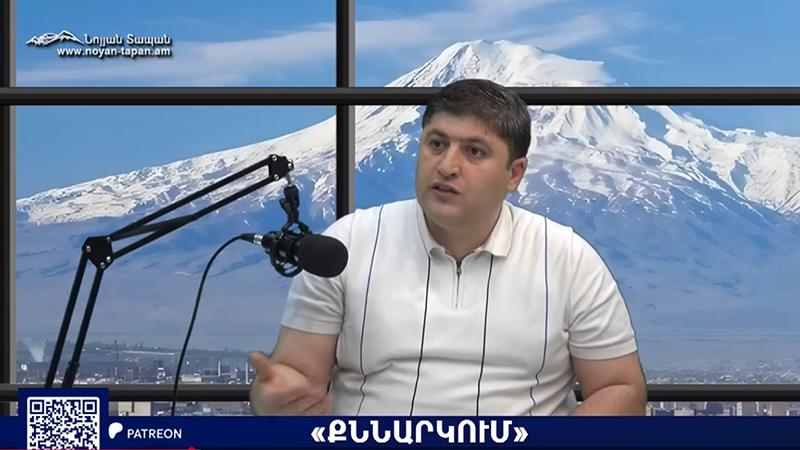
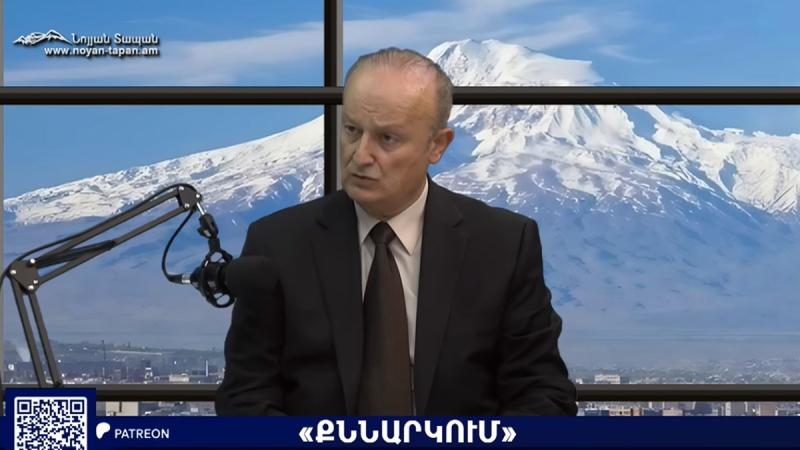
In a recent in-depth interview hosted by Noyan Tapan, Artur Sakunts, the prominent human rights defender and head of the Helsinki Citizens' Assembly-Vanadzor office, addressed the escalating tensions between state policy, academic freedom, and national security in Armenia. The conversation centered on the controversial dismissal of the director of the Armenian Genocide Museum-Institute and the broader implications for the country's democratic health.
The interview began by addressing Prime Minister Nikol Pashinyan’s justification for the removal of the museum's director, Edita Gzoyan. Pashinyan had framed the issue as one of state discipline, questioning whether Armenia is a "state or an amateur group" and asserting that officials must not deviate from the government's singular political line.
Sakunts strongly challenged this perspective, arguing that such a stance risks blurring the lines between democracy and authoritarianism. "In a democratic state, policy is formed based on pluralism," Sakunts noted, emphasizing that academic and scientific institutions must maintain a degree of independence from the shifting winds of current administration policy. He argued that a scientific institution’s role is to present objective historical facts, not to act as a mouthpiece for the government’s immediate diplomatic needs.
Security Fears and Historical Facts
A central point of contention was the gifting of a historical collection to a high-ranking U.S. official, which reportedly triggered the Prime Minister's ire. The Prime Minister’s caution appears rooted in a desire to avoid "messages" that could be used as a pretext by Baku or Moscow to escalate security threats.
Sakunts described this as a "fear-based" policy that overreaches. "Historical truths—such as the Genocide, the 1920s conflicts, or the Soviet-era decisions regarding Nagorno-Karabakh—are facts, not political interpretations," he stated. He warned that regarding historical research as a security threat is "entirely incompatible with the values of a democratic state" and academic freedom.
The Rhetoric of "Peace vs. War"
Turning to the upcoming election cycle, Sakunts analyzed Pashinyan’s latest narrative: the choice between a "Party of Peace" (the ruling Civil Contract party) and a "Party of War" (all other opposition forces). This binary framing echoes historical rhetoric used by Armenia’s first president, Levon Ter-Petrosyan, during his 1998 resignation.
However, Sakunts suggested that the real struggle in Armenia is not just between peace and war, but between democratic independence and continued dependence on the Kremlin. He pointed out that while the government seeks new security partners in the West and welcomes EU monitors, it remains deeply entrenched in economic and institutional ties with Russia—the very source of many perceived threats.
A Call for Institutional Courage
The human rights defender concluded that Armenia’s path forward requires the courage to admit mistakes and build robust democratic institutions that can withstand external pressure without sacrificing internal freedoms. He criticized the "governor-like" mentality that sees Armenia only as a dependent territory, arguing instead for a state where "independent and autonomous development" is the priority.
As Armenia navigates these complex geopolitical waters, the interview on Noyan Tapan serves as a stark reminder that the defense of democracy often begins with the defense of the right to speak historical truth, even when it is politically inconvenient.





 ENGLISH
  Հայերեն
 Русский
 Դաս. հայերեն
 French