Diplomatic Carrots and Domestic Strains: Deciphering Armenia's Current Political Landscape
08-04-2026 14:59:07 | Armenia | Interviews
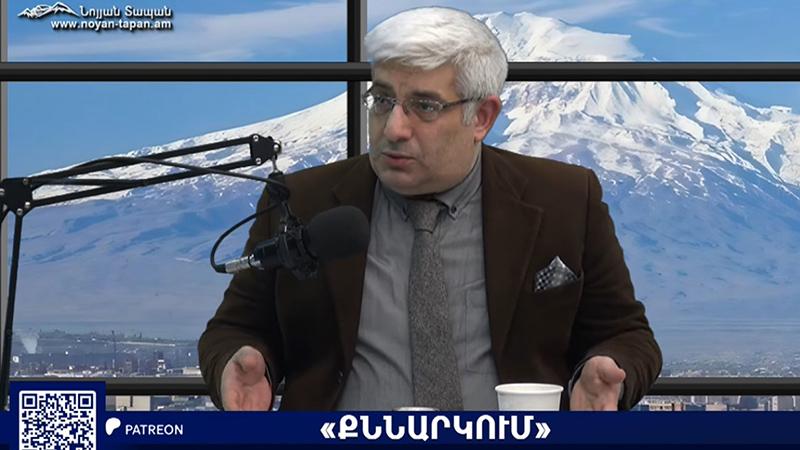
In a recent broadcast hosted by Noyan Tapan, Gayane Abrahamyan, President of the "For Equal Rights" NGO, offered a comprehensive analysis of Armenia's pressing geopolitical and domestic challenges. The extensive discussion navigated the nuanced shifts in Armenian-Russian diplomatic relations, the pervasive danger of hybrid warfare, and the societal impact of recent controversial judicial decisions.
The Shifting Tone of Armenian-Russian Diplomacy
The conversation opened with an analysis of Prime Minister Nikol Pashinyan’s recent meeting with Russian President Vladimir Putin in Moscow. Abrahamyan observed a distinct change in the meeting's atmosphere, noting that the tone, vocabulary, and body language were unusually mild and amicable compared to previous interactions. She suggested this marks a transition from a strictly punitive approach to one where Russia is beginning to offer a "carrot," realizing that previous aggressive postures were ineffective.
However, beneath the softer exterior, underlying tensions remain. Putin pointedly mentioned that there are many pro-Russian political forces in Armenia, noting that some are currently imprisoned despite holding Russian passports. Putin expressed a desire for these individuals to participate in Armenia's domestic political processes, specifically elections. Pashinyan firmly countered this assertion.+1
"With all due respect, persons with a Russian passport, according to the Armenian constitution, cannot be candidates for parliament or prime minister."
Abrahamyan interpreted Putin's focus on imprisoned Russian passport holders—such as Samvel Karapetyan—as a potential groundwork for future extradition demands, suggesting Russia might later demand their release or transfer by asserting jurisdiction over its citizens. Furthermore, she highlighted the ongoing manipulation regarding the Collective Security Treaty Organization (CSTO). While Russian media frequently obfuscates the issue by tying CSTO's inaction to the disputed status of Nagorno-Karabakh, Abrahamyan stressed that Armenia's appeals to the CSTO in September 2022 were explicitly regarding attacks on sovereign Armenian territory, such as the town of Jermuk. The CSTO's failure to respond placed Armenia's territorial integrity at severe risk.
Economic Coercion and the "Cynicism" of Hybrid Warfare
The diplomatic friction extends to the economic sphere. Russian Deputy Prime Minister Alexei Overchuk recently warned that Russian businesses are exhibiting extreme caution regarding economic cooperation with Armenia due to discussions about Armenia's potential accession to the European Union. Overchuk claimed that trade turnover dropped precipitously from $12 billion to $6 billion.
Abrahamyan characterized Overchuk's remarks, along with threats to halt investments in the Russian-managed railway concession in Armenia, as clear intimidation tactics designed to punish Armenia for looking toward Europe.
The broadcast also tackled the severe issue of hybrid warfare. In a move Abrahamyan described as "the greatest cynicism," Russian Foreign Ministry spokesperson Maria Zakharova recently announced that Russia is prepared to cooperate with Armenia in the fight against hybrid threats.
"This is the most comical, the greatest cynicism that could generally be expected from the Russian side."
Abrahamyan pointed out that Russia itself operates sophisticated bot networks—such as "Storm-1516", "Matryoshka," and "Doppelganger"—which are actively deployed to spread disinformation in Armenia. She detailed specific operations:
•Manipulated Media: An old 2022 interview containing threats from Azerbaijani President Ilham Aliyev was deceptively circulated as new by Russian-affiliated Telegram networks to incite panic and undermine the peace agenda.
•Fabricated Sources: A purported Turkish journalist named Okay Deprem—who actually lives in Donetsk, maintains ties with Russian intelligence, and has received awards from Putin—was used to spread false rumors about US military bases moving to Armenia and mosques being constructed in Yerevan to provoke societal anger.
Disproportionate Justice and Societal Trauma
Turning to domestic affairs, the Noyan Tapan broadcast critically examined the recent two-month detention of an 18-year-old student, David Minasyan, following an altercation involving the Prime Minister at a church. Abrahamyan forcefully condemned the judicial decision.
"Taking into account many circumstances, including health problems, the issue of graduating from school, etc., the arrest of the young man is an obviously disproportionate and illogical decision."
She highlighted a stark inconsistency in the justice system: while the 18-year-old remains incarcerated, the alleged organizer of the "hooliganism," political figure Gevorg Gevorgyan, was released on bail. Abrahamyan argued that if the organizer—who possesses more leverage to interfere with an investigation—is freed, incarcerating a teenager is entirely illogical and resembles a tactic of squeezing the "weakest link". She directed specific criticism at Judge Mnatsakan Martirosyan, suggesting he was attempting to do the government a disservice by issuing a hyper-punitive ruling that does not align with the state's true interests.
While Abrahamyan unequivocally stated that violence and attempts to strike state institutions are unacceptable and dangerous, she also questioned the operational competence of the State Protection Service (SPS) during the incident, asking whether the Prime Minister's visit was properly secured. Ultimately, she framed the domestic unrest within the context of a deeply traumatized, post-war society, warning that hybrid warfare tactics intentionally exploit these raw emotions to drive a wedge between the public and the state.





 ENGLISH
  Հայերեն
 Русский
 Դաս. հայերեն
 French