Between the Kremlin’s Shadow and European Ambitions: Karen Sargsyan Dissects Armenia’s Strategic Crossroads
08-04-2026 18:17:24 | Armenia | Interviews
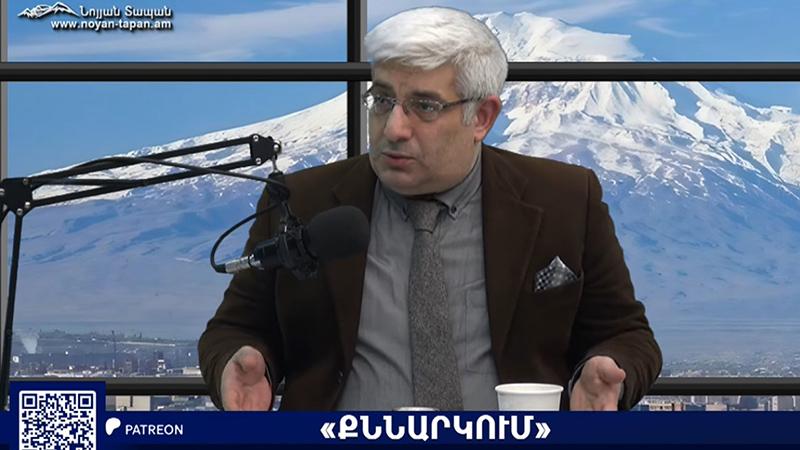
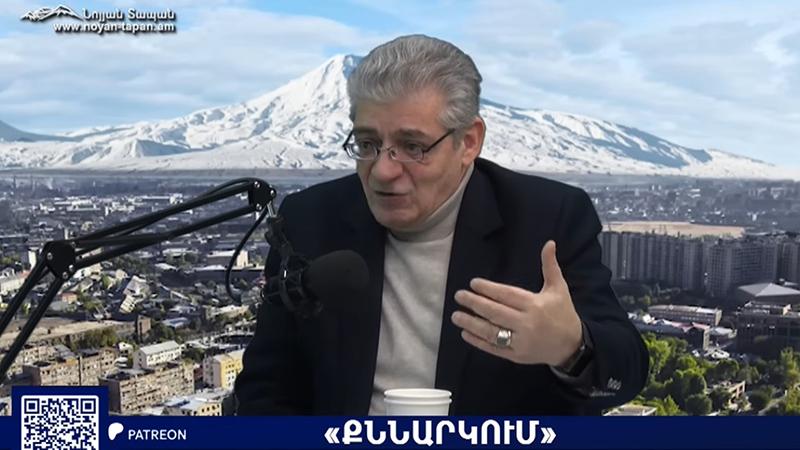
In a wide-ranging and candid interview hosted by the "Noyan Tapan" broadcasting network, sociologist, analyst, and President of the Euro-Atlantic Integration Platform Karen Sargsyan delivered a scathing critique of Armenian domestic politics, Russian diplomatic pressure, and the shifting dynamics of Middle Eastern and global geopolitics. Speaking with the host, Sargsyan addressed Prime Minister Nikol Pashinyan's recent visit to Moscow, the state of the Armenian opposition, and the broader implications of global conflicts for regional stability.
Dismissing Moscow's "Talking Heads" and Economic Threats
The conversation opened with an analysis of Prime Minister Nikol Pashinyan’s recent visit to Moscow and the accompanying interview by Russian Deputy Prime Minister Alexei Overchuk. Overchuk had issued a stark warning that Armenia would face unprecedented threats if it chose to sever cooperative ties with Russia.
Sargsyan immediately dismissed the weight of these warnings. He characterized Overchuk as a mere "talking head" devoid of real political power, representing the same faction responsible for the war in Ukraine. "These threats are mainly directed at Armenian voters," Sargsyan noted, explaining that the rhetoric is designed to instill fear among the population.
Addressing Overchuk’s claim that Armenian-Russian trade turnover experienced a drastic decline from $12 billion to $6 billion, causing a $5 billion loss, Sargsyan provided a distinctly different economic context. He alleged that the initial $12 billion peak was not organic trade but was rather generated through the "washing" of Russian gold and diamonds by companies linked to Khachatur Sukiasyan. According to Sargsyan, this lucrative operation was halted after Western officials discovered it, warning that Armenia could face sanctions if the activities did not cease.
The state of the South Caucasus Railway, managed by Russia, was also a point of intense contention. Overchuk had defended the railway's sluggish speeds—citing an increase to 46 km/h as the best possible outcome for a "mountainous country" that requires heavy investments. Sargsyan ridiculed this defense. "46 is a speed from the time of the First World War," he stated, pointing out that mountainous terrains in Bavaria or Japan do not prevent the operation of high-speed rail networks. Furthermore, Sargsyan accused Russian state-owned enterprises in Armenia, including the railways, of operating primarily as platforms for espionage and anti-Armenian activities.
Domestic Unrest and Pre-Election Maneuvering
Turning to domestic affairs, Sargsyan offered a highly critical assessment of Prime Minister Pashinyan's political strategies and recent public interactions. He characterized Pashinyan's recent trip to Moscow as an unnecessary capitulation, suggesting the Prime Minister essentially asked Russian President Vladimir Putin for permission to allow pro-Russian forces into the Armenian parliament. Sargsyan argued that both Pashinyan and his domestic political rivals are ultimately catering to the exact same pro-Russian electorate.
The analyst also condemned Pashinyan's recent unscripted interactions with the public, framing them as premature and poorly executed pre-election stunts. He specifically highlighted two controversial incidents: a confrontation in the metro with a woman from Artsakh, and a more recent altercation inside a church that resulted in the two-month detention of 18-year-old David Minasyan.
Sargsyan warned that Pashinyan is living in a "fantasy world" regarding his popularity. Sargsyan emphasized the severe security risks of these public stunts:
Pashinyan cannot accept the reality that a vast majority of the country—potentially 68%—harbors deep resentment toward him.
The Prime Minister's security detail is failing to protect him adequately by allowing these unvetted public interactions.
In the current volatile geopolitical climate, the assassination of an Armenian leader could be orchestrated by foreign powers to deliberately destabilize the entire region.
Global Geopolitics: The Middle East and Western Tech Shifts
The Noyan Tapan interview also explored the rapidly escalating conflicts in the Middle East and the shifting political landscape in the United States. Sargsyan asserted that the United States currently lacks the logistical capability to launch a successful ground invasion in the Middle East, noting that the military is suffering from the trauma of past wars in Iraq and Afghanistan.
Sargsyan was particularly critical of Israel's actions and its geopolitical standing. He labeled Israel a "failed state" that produces nothing and relies entirely on the American budget for its survival. He expressed outrage over reports that Israel had barred Christian denominations from entering certain churches in Jerusalem citing security concerns, an action he equated to depriving humanity of its religious rights. In contrast, Sargsyan argued that Iran has emerged from the current regional turmoil as a strategic victor, having effectively taken control of the Strait of Hormuz.
Concluding the interview, Sargsyan touched upon Armenia's technological and legal obligations. Reacting to news that the Chinese tech giant Huawei is discussing the construction of energy storage systems in Armenia, Sargsyan warned that such moves conflict with European integration standards. He detailed how Europe is actively seeking technological independence, moving away from American financial systems like Visa and Mastercard, banning Microsoft products in certain government sectors, and building its own alternatives. Sargsyan emphasized that Armenia is legally bound to a trajectory toward the European Union, and pivoting toward Chinese infrastructure fundamentally contradicts the nation's codified geopolitical direction.





 ENGLISH
  Հայերեն
 Русский
 Դաս. հայերեն
 French