Breaking the Kremlin’s Strings: Why Armenia’s Path beyond Moscow is Irreversible
03-06-2026 18:30:52 | Armenia | Interviews
As Armenia stands on the precipice of a pivotal parliamentary election, the domestic political landscape is charged with intense geopolitical debates over the country's future alignment. Amid escalating rhetoric and economic pressures from the Russian Federation, political figures in Yerevan are calling for a decisive shift toward Western integration and a definitive end to Moscow's traditional leverage.
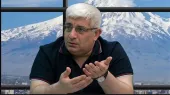
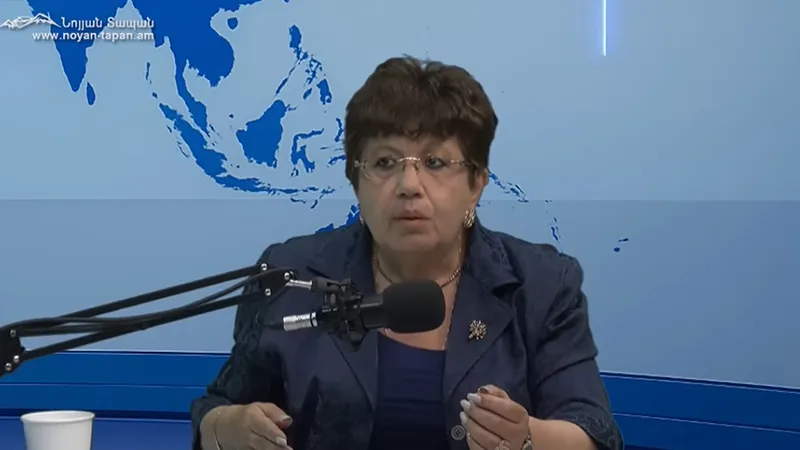
In an exclusive interview hosted by the media outlet Noyan Tapan, Anahit Adamyan, a candidate for parliament and member of the Political Council of the Hanrapetutyun (Republic) Party, laid out a bold vision for a self-reliant Armenia backed by real international partnerships.
A New Era of Alliances: Rubio’s Visit and the Western Shield
The conversation opened against the backdrop of a highly anticipated visit to Yerevan by U.S. Secretary of State Marco Rubio, signaling a major diplomatic shift in the region. While critics and opposition figures have floated warnings that the West aims to drag Armenia into an anti-Iranian campaign, Adamyan flatly dismissed these fears as "absurd political behavior."
"If the United States had any intention of dragging Armenia into an action of its own, believe me, it would not have sent Marco Rubio—it would have done it long ago," Adamyan asserted, discarding the alarmist predictions.
Instead, she framed the visit as a profound confirmation of Armenia's democratic trajectory. Pointing out that Rubio's itinerary skipped Baku entirely to focus on Yerevan, Adamyan emphasized that Washington is sending a permanent message:
"The U.S. Secretary of State does not visit just any country on his way from New Delhi to Washington. He comes to Yerevan to confirm that the political course pursued by the Republic of Armenia—from the standpoint of democratic development and ensuring security—has the support of the United States."
Addressing local anxieties regarding regional security, she added bluntly: "The United States is here, and the European Union is here... The Turks are not coming to eat us."
Overcoming Economic Blackmail and the Kremlin's "Political Fuel"
Armenia has recently faced a barrage of economic threats from Russian officials, ranging from potential trade bans to energy price hikes. Far from panicking, Adamyan views this friction as a necessary catalyst for the country’s economic liberation.
Historically, she argued, Russia has weaponized its energy resources across Europe and the Caucasus. "Throughout its entire activity, the Russian Federation has supplied gas to Europe as a political fuel," she noted. However, she believes Moscow’s blackmail will ultimately backfire, forcing Armenian businessmen to upgrade their standards and look to vastly more lucrative global markets.
Should Moscow cut off energy supplies, Adamyan notes that viable alternatives, such as Turkmen gas, are readily available, just as they were during the early years of independence. Furthermore, she argued that persistent disruptions at the Upper Lars border checkpoint will only accelerate the opening of the Armenian-Turkish border and the deployment of new logistics routes.
Critiquing Armenia's membership in the Eurasian Economic Union (EAEU), Adamyan stated:
"We have no prospects, no development in the EAEU. The EAEU has neither new technologies nor investments. It is merely a market operating under a corrupt scheme where economic interests are not paramount, but political threats are."
Nuclear Strategy and the Transport Trap
A central expectation of the strengthening U.S.-Armenia relationship is the signing of a modular nuclear agreement. According to Adamyan, securing a modular reactor contract within the framework of a nuclear agreement with the U.S. would serve as the "best exhaustive answer" to Moscow’s intimidation.
The candidate also took aim at Russia's failure to manage Armenia's railway infrastructure under its current concessionary agreement, accusing Moscow of actively sabotaging regional transit initiatives. "The problem of problems for the Russian Federation is to prevent the operation of transit routes in Armenia," she said, insisting that Armenia must take independent control of its infrastructure with American backing rather than relying on absurd compromises involving third countries like Kazakhstan.
The June 7 Election: A Civilizational Choice
With parliamentary elections scheduled for June 7, 2026, Adamyan described the upcoming vote as a historic, civilizational turning point for the nation. She warned against attempts by Kremlin-backed figures to stage post-election unrest or replicate regional oligarchic capture models.
While conceding that the ruling Civil Contract party will maintain a presence in parliament, she stressed the vital importance of denying them an absolute majority. For Armenia to break its stagnation and match the regional strides of its neighbors, it requires a robust, principled pro-Western opposition to lock out what she described as the "blunder of Kremlin witnesses."
Refusing to accept the narrative of a permanently defeated nation following the loss of Artsakh, Adamyan called for a revival of national dignity, recalling the spirit of the historic 1999 military parade.
"The idea of perishing and disappearing is being instilled in us today from Moscow and from within," she concluded passionately. "If you think you are eternally defeated, you simply have no right to live. We are not that country, and we are not that people... We will not allow it."





 ENGLISH
  Հայերեն
 Русский
 Արեւմտահայերեն
 French