Why does the U.S. want to hand over Hezbollah's dossier to Syria? - Shahan Ghantaharyan
22-06-2026 20:59:00 | | A comment
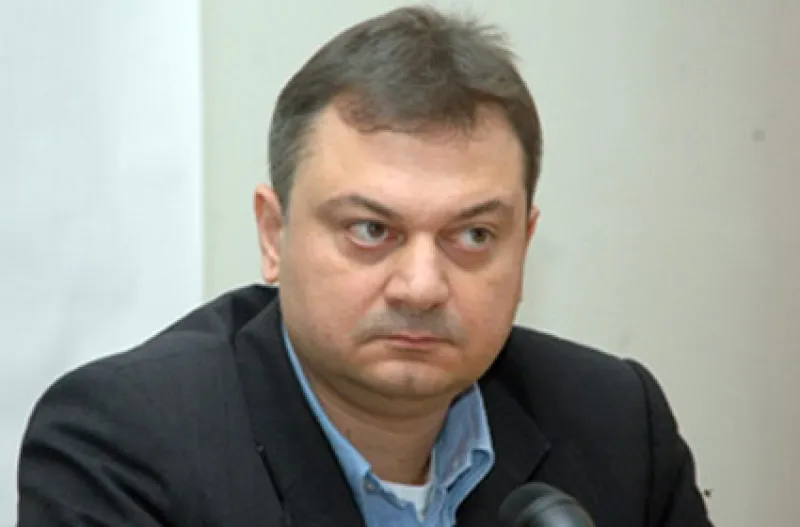
Why does the US want to hand over Hezbollah's dossier to Syria? "Noyan Tapan" spoke with political analyst Shahin Gantaharyan.
- The President of the United States has once again spoken about transferring the Hezbollah issue to Syria. What does this statement mean?
- In his latest statement, he mentioned that he is disappointed with Israel, as in his assessment, Israel cannot achieve any results without causing destruction in Lebanon. At the same time, he spoke about transferring the Hezbollah issue to Syria and giving a greater role to Syrian President Ahmed al-Shara. This statement contains several political messages.
- First, let's address the expressed disappointment towards Israel. How should it be understood?
- If we consider previous statements, hints, and threats, it is clear that the discussion is not only about the destruction of buildings in Lebanon. The disappointment has a broader nature. It is related to the reality that even under the existing, albeit fragile, ceasefire conditions in US-Iran relations, Israel has continued and even intensified its military operations towards Lebanon.
- So, does it seem that Washington is dissatisfied with Israel's actions?
- At least, that impression is created from the given statement. According to this approach, the neutralization of Hezbollah and the large-scale destruction of Lebanon are not identical. The US seems to be trying to separate these two phenomena, hinting that Israel's actions are causing excessive damage to Lebanon.
- In that case, what can be understood from the idea of transferring the Hezbollah issue to Syria?
- This implies that an alternative solution to the Hezbollah problem is being sought. If Israel has not succeeded in achieving its goals through military operations, then Syria is expected to be involved in a process directed at Hezbollah, but which will not lead to the destruction of Lebanon's infrastructure and settlements.
- What message is being addressed to Israel?
- The main message is that Israel is given the opportunity to choose the political path. That is, to agree to a ceasefire, start negotiations, and halt military operations. Otherwise, other regional actors may be engaged, and Israel's influence on certain processes may be limited.
- Why is Syria's role considered so important?
- Because present-day Syria, especially in the military sphere, is significantly dependent on Turkey. Therefore, the role assigned to Syria could also mean an increase in Turkey's role. Although official Damascus has stated that it does not wish to assume such responsibility or deploy troops in Lebanon, this does not mean that Ankara cannot be involved in the resolution process.
- What goals might Turkey pursue in this context?
- In recent years, Turkey has been trying to strengthen its position in the region. President Erdogan has repeatedly emphasized that Gaza, Syria, and Lebanon hold significant places in Turkey's security calculations. If Ankara is offered a role in the Hezbollah issue, it could become another opportunity for expanding its regional influence.
- How does all this affect Israel-Turkey relations?
- If Washington is indeed trying to transfer one of the key issues to a format involving Turkey, it inevitably exacerbates the competition between Israel and Turkey. At the same time, the processes of forming regional counterweights are becoming more active.
- What is the main political message of these statements?
- The main message is that Israel must choose the path of ceasefire and negotiations. Otherwise, Turkey's role in resolving important regional issues may increase, including in strategically significant matters related to Iran, which could occur at the expense of Israel's interests.
* This text was automatically translated by Artificial Intelligence (AI).




 ENGLISH
  Հայերեն
 Русский
 Արեւմտահայերեն
 French