Syunik Over Sovereignty: David Shahnazaryan on Moscow’s Ultimatum and Armenia’s Civilizational Choice
26-06-2026 15:14 Armenia Interviews
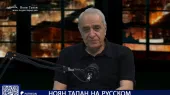
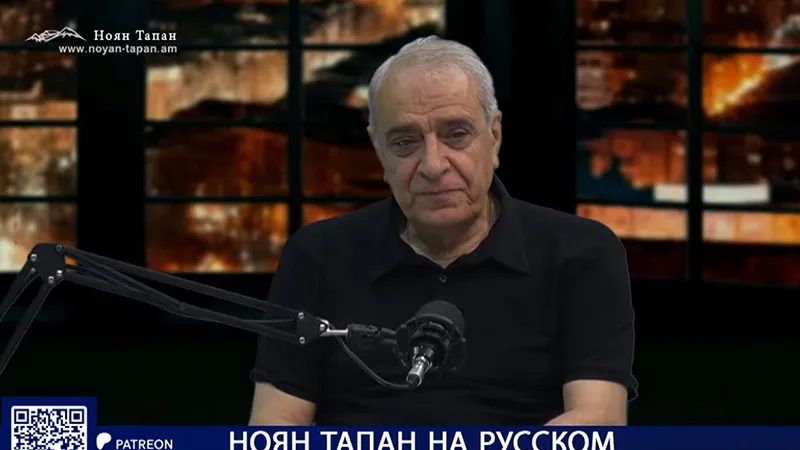
In a sharp and wide-ranging interview hosted by Noyan Tapan, prominent political analyst and statesman David Shahnazaryan delivered a scathing critique of Russia’s current foreign policy toward Armenia, the shifting geopolitical dynamics in the South Caucasus, and Yerevan's urgent need to make a definitive civilizational choice. Speaking with journalist Gayane Arakelyan, Shahnazaryan dissected the latest ultimatums from Moscow, the strategic ambitions of Turkey, and the internal political stagnation paralyzing Armenia.
The CSTO Illusion and the Zangezur Ultimatum
The discussion opened with recent statements from Victor Vasilyev, Russia’s Permanent Representative to the Collective Security Treaty Organization (CSTO), who noted that Moscow is waiting for Yerevan to decide whether it will remain in the bloc or choose "another scenario".
For Shahnazaryan, there is no ambiguity about what this "other scenario" entails. He argues that Armenia should not wait to be pushed out but should proactively exit the organization.
"Right now, Armenia does not physically participate in the CSTO, yet it implicitly approves all decisions made in its absence and bears full responsibility for them," Shahnazaryan stated. "The Armenian authorities must finally define their position and say, 'We are no longer in the CSTO,' rather than allowing Moscow to exploit this leverage."
According to the analyst, the relentless pressure regarding the CSTO is merely a smokescreen for Russia's true geopolitical objective in the region: securing control over the southern Armenian region of Syunik, often referred to as the Zangezur Corridor or the TRIP project.
"The real, singular demand that Moscow has for Armenia is agreement on the ninth clause of the November 9, 2020 trilateral statement," Shahnazaryan explained, emphasizing that Russia wants to control the Armenian-Iranian border to use it as a bargaining chip with Turkey. "It is about taking control away from Yerevan so Putin can tell Erdogan: 'The Zangezur Corridor is now mine, and you must negotiate with me, not Pashinyan.'"
Turkey’s Pivot and Russia’s Diminishing Influence
A significant portion of the interview focused on the changing role of Turkey, highlighted by Turkish Foreign Minister Hakan Fidan’s recent three-day visit to Moscow. Shahnazaryan pointed out that while Russia has historically attempted to split the South Caucasus with Turkey at Armenia’s expense, Ankara's geopolitical vector is steadily shifting back toward the United States and the European Union.
Economic Decoupling: Turkey has drastically reduced its purchases of Russian oil and gas, while Turkish banks have begun closing Russian accounts to comply with Western sanctions.
Strategic Partnerships: Washington and Ankara are increasingly collaborating on regional issues, such as the Libyan settlement, leading Western analysts to view Turkey once again as a firm US ally.
Regional Rivalries: Despite Moscow and Ankara pushing the "3+3" regional format, Shahnazaryan remains highly skeptical of its viability, noting that Iran fiercely opposes Turkish dominance and the Zangezur project.
"Iran and Turkey have never been allies; they have always been competitors," Shahnazaryan noted, adding that Armenia must engage in quiet, sophisticated diplomacy with Tehran to prevent Russian or Turkish control over its southern borders.
The Mirror of the Ukraine War
Shahnazaryan drew direct parallels between Russia's aggressive rhetoric toward Armenia and its stalling military campaign in Ukraine. He described Russia as a "technologically backward country" that has lost the strategic initiative on the battlefield.
"The entire world is thoroughly studying the Ukrainian experience, particularly in drone warfare and electronic countermeasures," he remarked, noting that even traditional Russian allies like Belarus are beginning to push back against Moscow's demands.
This military and technological decline, according to Shahnazaryan, explains why Russian state propaganda has turned so aggressively against Armenia. Commenting on insulting remarks made by prominent Russian media figures of Armenian descent, Shahnazaryan expressed disdain for those who "try to curry favor with their political leadership at the expense of their own nation."
A Call for a Civilizational Choice
Domestically, Shahnazaryan offered a grim assessment of Armenia's current political landscape, labeling the parliamentary opposition as "pathetic" and predicting they would readily take up their mandates despite staging public protests. He warned that public disillusionment with both the government and the opposition is absolute.
However, he sees a silver lining in Moscow's relentless pressure. By closing its markets and issuing constant threats, Russia is inadvertently forcing Armenia to diversify its economy and seek new security partners. He welcomed recent steps, such as Armenia's participation in the Ukraine security conference in Poland and the opening of a Ukrainian Chamber of Commerce representative office in Yerevan.
Ultimately, Shahnazaryan framed Armenia's dilemma not merely as a political shift, but as a fundamental civilizational choice.
"The European path is a path toward security and civilization. Russia has actively rejected European civilization, moving instead toward a new form of Stalinism. For Armenia, choosing anything other than the Western civilizational path is nothing short of suicide."
* This text was automatically translated by Artificial Intelligence (AI).


 ENGLISH
 Հայերեն
 Русский
 Արեւմտահայերեն
 French