How the expiration dates of cosmetics sold in Yerevan are falsified
03-07-2026 17:06 Armenia Press of Diaspora
Hetq.am We use face moisturizers, masks, serums, and other cosmetic products almost every day, believing that we are taking care of our skin. However, they can have negative effects or consequences if they are expired.
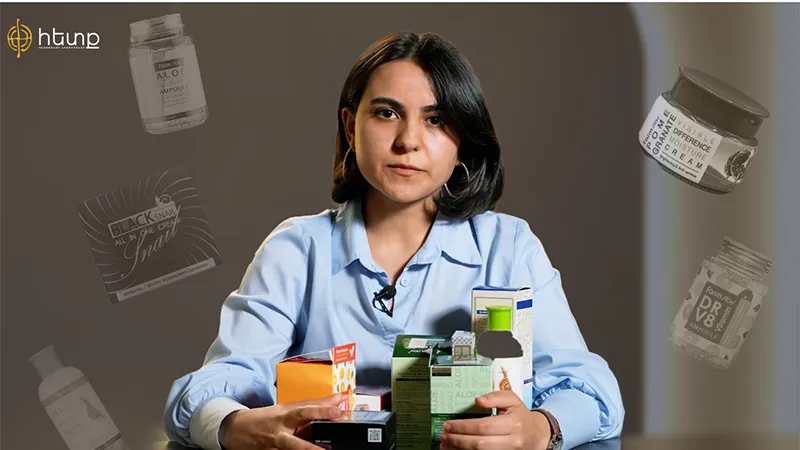
In several stores in Yerevan, expired, counterfeit-dated, or unlabeled cosmetics without expiration dates are being sold. "Hetq" made these revelations by visiting and making purchases at "Original Boutique," "Mari," and "Eva Cosmetics" stores:
What we discovered where
We purchased a moisturizing emulsion from the Farm Stay brand from the "Original Boutique" (Abovyan 25, link) in February 2026. The expiration date of this product was counterfeit. An old date was marked on the bottom of the product's container, indicating that the expiration date had passed two years ago, in 2024. This marking had apparently been attempted to be erased, as it is only legible under bright light and is not noticeable at first glance. Instead, a new bright black expiration date is marked on the side of the same bottle. According to the second marking, the product's expiration date is November 21, 2026. The "Original Boutique" had similar products with the same "fresh" marking available.
The situation was different at the "Mari" supermarket. We first visited the "Mari" supermarket, located near the "Shengavit" metro station, in March 2026. A number of products were being sold in the store that had expired about six months ago. They were sold not with new expiration markings but with the old dates. All of them were products of the "Farm Stay" brand. These included moisturizers, serums, cleansing foams, and creams designed for simultaneously opening the skin, eliminating wrinkles, and protecting from the sun. Almost two months later, we were back in this store. Some of the same products were still being sold, while others had presumably been sold out.
When asked why expired products were being sold, a store employee replied that the date marked on the packaging is not the expiration date but the production date. However, there was no other date or month on the packaging to confirm the expiration date marking.
We simultaneously discovered products in the store that were being sold without an excise code, stamp, or QR code. The face mask only had a barcode marked on it. This means that the product is outside tax control. We also found products of the same brand in the same store that did not have any expiration date marked at all. A special price of 1760 drams applied to this group of products.
The next violation was discovered at the "Eva Cosmetics" store located in the "Metronome" shopping center. In this store, we found products from a Korean brand that lacked the factory code for the expiration date. Instead, the expiration date was marked on the Armenian label as "10.2027."
All of the aforementioned products were from the Korean "Farm Stay" brand. All these products, which are being sold with violations, were imported to Armenia by "MBM" LLC. This company is presented as the official importer of the "Farm Stay" brand on the packaging of some products.
Is expired cosmetics dangerous?
Yes. But first, what is cosmetics and why is expired cosmetics dangerous?
Cosmetics are not just lipstick, eye pencil, foundation cream, pressed powder, or eyeshadow. The range of cosmetic products or beauty products includes a wide variety of items, such as skin care products like moisturizers, gels, foams, masks, lotions, sunscreens, shampoos, and more.
In general terms, cosmetics are substances or mixtures of substances intended for certain external parts of the human body, used to clean the skin, hair, nails, lips, external genitalia, as well as teeth and oral mucosa, without altering their integrity, for the purpose of changing appearance, regulating or imparting odor, protecting, or maintaining in good condition.
What is in cosmetics?
Almost all cosmetic products contain water, emollients (such as oils), thickeners (such as polymers), emulsifiers (including cetearil alcohol and glycerin), surfactants, preservatives (such as parabens, phenoxyethanol, and benzyl alcohol), colorants, and fragrances. Each of these has its important role and is intended for a specific function.
What is the significance of the acidic environment?
Each cosmetic product and each ingredient in a cosmetic product is effective and stable only under certain acidity conditions. The pH level guarantees the effectiveness and safety of the cosmetic product throughout its entire shelf life.
"The pH is a key indicator for cosmetic products, as both the activity of actives, such as vitamin C, retinoids, niacinamide, and the effectiveness of preservatives depend on it," notes chemist Ani Nasibyan.
One of the most important functions of preservatives, a key ingredient in cosmetic products, is to prevent microbial growth. Cosmetic formulations, due to their nutrient composition, provide an excellent environment for the survival and development of microorganisms. This is why preservatives are defined in some regulations as substances "primarily aimed at inhibiting the growth of microorganisms in cosmetic products." Preservatives are used in small amounts throughout the entire period of production, packaging, storage, and use of the product.
Depending on how much the pH is disrupted, preservatives may work less effectively or not at all.
"When preservatives fail, microbial growth occurs, leading to bacteria, fungi, and biofilms. But the most terrifying aspect is that these processes are not visible to the naked eye. At least in the initial period, we cannot understand that such reactions are occurring in the product," says Ani Nasibyan.
Until it reaches the store...
When using a cosmetic product, a person's skin comes into direct contact with all the ingredients contained in it. That is why cosmetic products must be safe for human health when used as intended. During stability tests, compliance studies, and other laboratory investigations, all risks are neutralized, and the criteria for pH, viscosity, color, odor, separation, and packaging compatibility are assessed. Only positive results from these tests and studies guarantee the safety, stability, and effectiveness of the cosmetic product throughout its shelf life.
How does the acidic environment change, or what happens to the cosmetic product after it reaches the store?
First, it should be noted that a change in the pH level is not the cause of a change in the chemical composition of the product, but rather an indicator that changes are occurring inside the product.
A number of factors affect the acidity level of the cosmetic formulation. First, when the product's expiration date is reached, the chemical composition of the product changes.
"If the expiration date of a product is 6 months, it does not mean that the product spoils the day after the 6 months pass, and we are dealing with poison. Simply, as the expiration date passes, processes occur in the product that are no longer controllable; the stability of the cosmetic formulation is disrupted, the product may become very watery, or the overall texture may become non-homogeneous, for example, clumps may form in the product," notes chemist Ani Nasibyan.
Many ingredients in cosmetic products gradually degrade under the influence of heat, oxygen, or light. Decomposition reactions often produce acidic or basic by-products that change the pH of the formulation.
"A product stored under improper conditions and an expired product are similar in their properties. In general, raising the temperature by 10 degrees increases the rate of chemical reactions by two to four times. That is, if it is calculated that a certain cosmetic product can be stored for six months, its shelf life is reduced under improper storage conditions," says Ani Nasibyan.
The storage temperature conditions of cosmetic products, the containers of cosmetic products, and the components of the packaging also affect the acidic environment. For example, packaging materials may cause the migration of additives into the product, absorption of acidic or basic components, penetration of oxygen or moisture, and so on.
What consequences can arise?
"There is a common misconception that expired cosmetics are simply ineffective, but they are not just ineffective; they are also dangerous," says researcher Ani Nasibyan.
The interaction of active substances, emulsifiers, oils, and other active ingredients in cosmetics with a disrupted acidic environment becomes dangerous and aggressive for the skin, causing irritation, dryness, or sensitivity, damaging the skin's barrier function.
Researcher Ani Nasibyan notes, for example, about niacinamide and its conversion to nicotinic acid over time.
"The niacinamide used in cosmetic products has good properties for the skin. It can soothe the skin, alleviate irritation, but if the pH is disrupted, niacinamide can convert to nicotinic acid, which can have the opposite effect, irritating the skin, causing redness, and disrupting the skin's protective layer, leading to tingling," she notes.
Even more dangerous is the conversion of benzoyl peroxide to benzene. According to Ani Nasibyan, benzoyl peroxide itself is not harmful; moreover, it is used in cosmetic products to treat acne. However, when a product containing benzoyl peroxide is stored under improper conditions or its expiration date passes, it converts to benzene. And benzene is a class one carcinogen.
If the product contains colorants, a change in color occurs with a disruption of the pH level, and the degradation of fragrances increases the likelihood of allergic reactions. In the case of using expired mascara for eyelashes, for example, inflammatory eye diseases may develop.
Thus, it is important not only to pay attention to the expiration date before buying cosmetics but also to the storage conditions of cosmetics in the store and at home after purchase.
"It is important not only to control the temperature but also to keep the product away from direct sunlight, because almost all types of cosmetic products are photosensitive; the actives they contain, such as vitamin C, retinoids, degrade under the influence of direct sunlight," notes researcher Ani Nasibyan.
Thus, liquid cosmetic products should be stored at temperatures not lower than 5°C and not higher than 25°C, for solid hand soap not lower than minus 5°C, and for other cosmetic products not lower than 0°C and not higher than 25°C:
Cosmetic product labeling
The rules for the expiration date and storage conditions of cosmetic products are defined by the "Safety of Perfume and Cosmetic Products" technical regulation of the Customs Union.
All rules related to the import, labeling, and sale of cosmetic products are also defined by this technical regulation.
According to it, the labeling of perfume and cosmetic products must include the product name, purpose (if it does not derive from the product name), country of origin, name of the authorized representative of the importer or manufacturer, nominal quantity of the product in the consumer container (if it is not less than 5 grams or 5 milliliters), color or shade for decorative cosmetics, expiration date, production date (month, year), and description of storage conditions, especially if those conditions differ from standard conditions.
The labeling of cosmetic products must also include the batch number or special code, which allows for the identification of the product batch.
It is mandatory for the packaging to include the composition. Ingredients are listed in descending order of their mass fraction. Ingredients are listed when their concentration exceeds 0.01% in rinse-off products and 0.001% in leave-on products. Ingredients with a concentration of less than 1% may be listed in any order after those with a concentration of more than 1%.
In Armenia, there is also a mandatory requirement for the electronic labeling (stamping) of imported products, which is monitored by the State Revenue Committee of the Republic of Armenia.
By a government decision dated February 6, 2025, the procedure for the digital stamping of products in Armenia has been established. According to the decision, a "Data Matrix" two-dimensional code must be affixed to products. This allows for tracking the movement of the product from production or import to sale. This decision has established a list of products subject to stamping. Starting January 1, 2026, cosmetic products, skin care products, hair care products, perfumes, and deodorants will also be included in this list. Importers can carry out the stamping after customs clearance in their warehouses.
The data entered into the digital system includes mandatory and optional fields. The mandatory fields are the product name, country of origin, manufacturer details, and composition. In contrast to the above, the expiration date and production date are indicated in the digital system as optional fields, which may be concerning from a consumer safety perspective.
"MBM" LLC is one of the major importers of cosmetics
According to the SRC data, in 2024, about 13,230 tons of cosmetic products were imported into Armenia, with a total value of about 121.3 million USD. This includes essential oils, perfumes, and hygiene products for skin, hair, and oral cavity (codes 3301-3307). In the same year, 2,212 tons of products intended for skin care and makeup were imported into Armenia, with a total value of 35.6 million USD.
A number of companies have maintained their position in the top three major importers of skin care and makeup for years. "MBM" LLC is one of the most stable market participants, consistently ranking among the top three importers from 2016 to 2023. "Oriflame Cosmetics" LLC was in the top three from 2016 to 2020 but has not appeared on this list since 2021. "Alpha-Pharm Import" LLC has been in the top three since 2021. It has maintained its position until 2025.
In 2016 and 2021, "Barsis" LLC also appeared in the top three, which is affiliated with "MBM" LLC. Notably, in those years, both companies were in the top three, holding an absolute dominant position over other importers. "Barsis" LLC, in turn, imports almost all types of cosmetic products into Armenia.
In 2023, Armenia imported 61 tons of skin care and makeup products from Korea. However, it is noteworthy that in 2024, this volume was nearly halved, reaching 35 tons.
Who is responsible?
After discovering violations in the sale of cosmetics, "Hetq" presented them to "MBM" LLC. The company requested a week to investigate and comment on them.
In its response, the company stated that it does not bear responsibility for the sale of expired cosmetic products in the "Mari" supermarket, as the product was supplied to the store on April 14, 2025, six months before the expiration date.
Regarding the sale of a cosmetic product with a counterfeit date in the "Original Boutique," the company stated that it supplied that product to the store in November 2024. The company also mentioned that it contacted the store to clarify the details. Below is an excerpt from "MBM" LLC's comment: "The end consumer tried to argue that the expiration date is marked on the specified product, but according to their assumption, it seems that some traces are visible under that date, which, however, was not proven during the discussion in the store, even after a thorough examination under special light. As it appears, from the dates we mentioned, the product has been in the possession of that buyer organization for about 1 year and 4 months and has been displayed on the shelf, and naturally required care by cleaning the dust off the product, which may lead to the ink markings losing their original appearance."
"Hetq" has never mentioned the phrase "some traces" when presenting the violation of the sale of that product. We have clearly stated that there are two different markings for the expiration date on the product. This fact was also confirmed by the director of "Original Boutique" after inspecting the product on-site. We met with the director of this store before the meeting with "MBM" LLC, which we also informed "MBM" LLC about.
As for the "erasure of markings on the product due to cleaning the dust," it has no relevance to the issue we raised.
For the sale of cosmetic products without a factory code, "MBM" LLC contacted the manufacturer "Myungin," which responded that the absence of an expiration date on the "ALL IN ONE" product is a "technical error." However, the company did not specify whether this refers to all product groups of the "ALL IN ONE" product, only to the group of products presented to "MBM" LLC, or just one product.
At the same time, it is unclear why "MBM" LLC did not raise the issue of the absence of a factory code at the time of importing the product. In fact, the company imported and sold products that do not comply with legal requirements. Additionally, we have discovered other products with the same issue, which we have informed the company about. It is unclear whether "Myungin" allowed the same error for other products as well.
In contrast to "MBM" LLC's inquiry, "Myungin," the company that owns the "Farm Stay" brand, did not respond to "Hetq's" inquiry. We asked how the company implements its product labeling, whether it is aware that re-labeled, counterfeit-dated "Farm Stay" brand products are being sold in stores in Armenia, imported by its official representative "MBM" LLC, and whether it has allowed its importers to erase, cover, or change the factory codes of the products. We attached images of expired, counterfeit-dated, and in-date products to the letter, asking for both the production dates of these product groups and the compliance of the factory codes. We also sent an inquiry to the Ministry of Food and Drug Safety of the Republic of Korea, which is authorized to oversee the production and sale of cosmetic products. Neither the company nor the ministry responded to our inquiry.
"Hetq" also sent an inquiry to the Market Surveillance Inspectorate of Armenia. We asked how frequently the inspectorate checks the sale of cosmetic products and whether it has ever discovered violations during those inspections. In response to our inquiry, the Inspectorate stated that in the last two years, it has conducted 144 inspections, resulting in violations being found in 16 economic operators. The violations related to products without Armenian labeling and without expiration date markings. Cases of products without expiration date markings were found in 13 economic entities.
The sale of expired, counterfeit-dated products is prohibited
The legislation of Armenia regulates the expiration date, the sale of expired products, the falsification of dates, consumer deception, and the related relationships and requirements. Its purpose is to protect consumer health and interests. The Civil Code (Article 488) establishes the expiration date. Specifically, for products with an expiration date, the seller is obliged to deliver it to the buyer in a way that allows for its use as intended before the expiration date expires.
The Code of Administrative Offenses (Article 158) prohibits the sale of products whose expiration date has passed, those that do not have an expiration date marked, those with falsified (erased and replaced with a new date, or double-marked) expiration dates, or those with illegible expiration dates. The same article stipulates that administrative fines are imposed for the aforementioned violations (the sale of expired, indefinite, or falsified date products) ranging from 100 to 200 times the minimum wage. "Hetq's" investigation shows that the sale of expired products and the falsification of expiration dates in the cosmetics market is a widespread phenomenon. Expired cosmetic products, losing their stability, can harm human health, and their sale contradicts consumer interests. And as long as market surveillance does not fully eliminate such violations, the only effective protection for consumers when making purchases is additional vigilance—checking the expiration date of the product and strictly following the storage conditions.
* This text was automatically translated by Artificial Intelligence (AI).


 ENGLISH