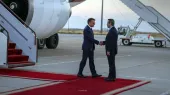
1in.am On July 7, U.S. President Donald Trump will arrive in Ankara. According to the Turkiye newspaper, he will be welcomed at the airport by Turkish President Recep Tayyip Erdoğan. On the same day, at 15:00 local time, the Trump-Erdoğan face-to-face meeting will begin, followed by negotiations with the participation of delegations.
The Turkish presidential office has informed the media that during the Trump-Erdoğan private conversation, they will discuss "military industry, trade, energy cooperation, regional events, the Russia-Ukraine conflict, and the Gaza issues." There are high expectations for the U.S. president's visit to Ankara.
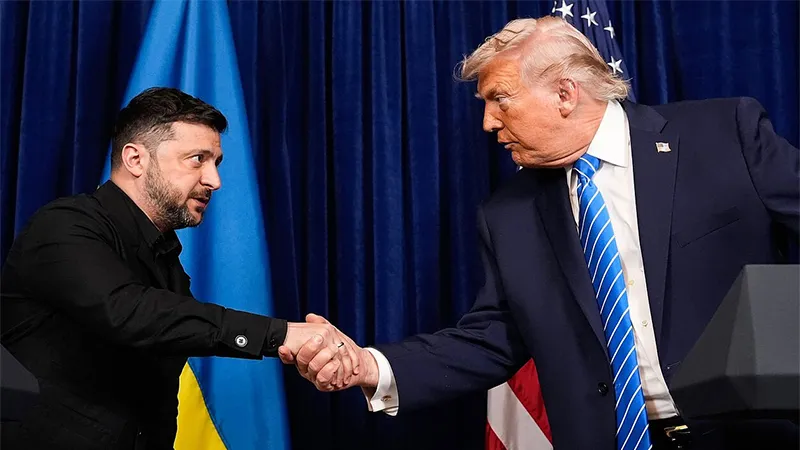
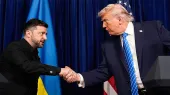
The U.S. president will also meet with Ukrainian President Volodymyr Zelensky in Ankara. The latter announced this personally after a phone conversation with Donald Trump on July 4. The day before Donald Trump's trip to Ankara, U.S. Vice President Pence made a rather extensive statement regarding the Russia-Ukraine war, which clearly indicates that the recent actions of the Ukrainian side have "introduced a fundamental change" in the perceptions of the White House.
Most likely, this approach has been communicated to Moscow through diplomatic channels. On July 5, the press secretary of the Russian president, Peskov, referred to the Russia-Ukraine armed conflict as a "real war" and expressed regret that Washington is also supporting Kyiv.
Ahead of the NATO summit in Ankara, the well-known Russian political scientist Karaganov, who is considered to have "influence in the Kremlin," unequivocally stated in an interview with Interfax that Russia "must use thermonuclear weapons for a radical solution." European Commission President Ursula von der Leyen assured that the NATO summit "will address the issue of providing Ukraine with sufficient means for missile defense."
Previously, the Ukrainian president requested a license for the production of Patriot missiles from the United States. Will the Trump-Zelensky meeting provide a solution to this issue?
* This text was automatically translated by Artificial Intelligence (AI).


 ENGLISH