The famous and unknown inventions of Armenian scientists that changed the world
09-09-2026 14:44 Science and Technology
Science is one of the most important driving forces of human development. What once seemed impossible or inexplicable has gradually become understandable and accessible thanks to the progress of science. Scientific discoveries have changed our daily lives, from medicine to transportation, energy, and space exploration. Armenian scientists and inventors have also made significant contributions to this universal process.
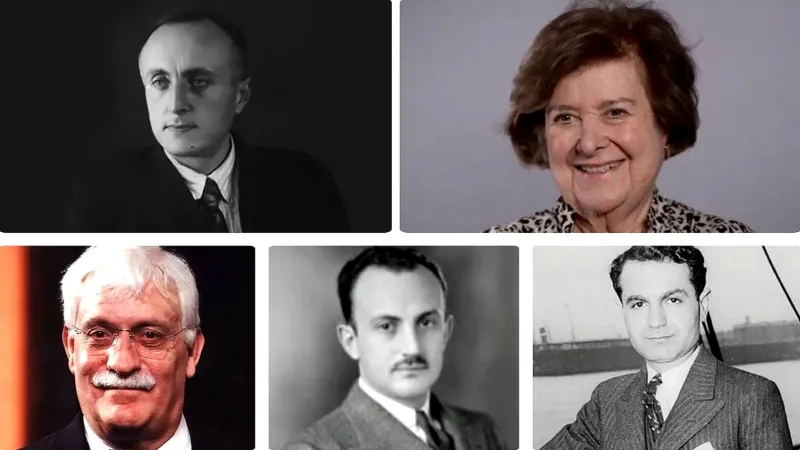
Hovhannes Adamyan
Hovhannes Adamyan was a prominent Armenian engineer and inventor whose work played a decisive role in the history of color television development. He was born on February 5, 1879, in Baku, into a family of oil producers, and received his education at the universities of Munich, Zurich, and Berlin, specializing in technical sciences.
In Germany, Adamyan established a laboratory with his own funds, where he conducted scientific experiments. In 1908, he was one of the first to establish the possibility of transmitting images through electricity and carried out the first experiments of transmitting color images via cables. After moving to Russia in 1913, he continued his research in Saint Petersburg. During those years, he received 21 patents, two of which were related to television.
Adamyan's main contribution is considered to be the development of color television technology based on the principle of combining three colors. He named his project for creating color television "Hervates." Later, the principles of the system he proposed were applied in the United States in the 1950s for displaying color images. In addition to his talent in technical sciences, Adamyan was fluent in several European languages and had interests in painting, architecture, and music.
Raymond Vahan Damadian
The name of Raymond Damadian is closely associated with the creation of magnetic resonance imaging (MRI). He was the world's first inventor to discover the diagnostic device for magnetic resonance imaging, which allows for the examination of human internal organs without surgery.
Damadian was born in 1936 in New York to a family of survivors of the Armenian Genocide. During his school years, Raymond's parents were convinced that their son would become a world-renowned violinist; he attended the famous Juilliard School of Music. The talented young man even participated in the junior Davis Cup tennis championship, but when his grandmother fell ill and died of cancer, he decided to direct his abilities toward medicine and helping people.
In 1956, he graduated from the University of Wisconsin with a bachelor's degree in mathematics, and in 1960, he received his Doctor of Medicine degree from Albert Einstein College of Medicine. In 1977, Damadian created the world's first whole-body MRI machine, which he named "Indomitable," highlighting the long-term efforts and work required for its creation. Later, his assistant Larry Minkoff performed the first complete scan of a human body.
Damadian received more than 45 patents for the improvement of his MRI device. His innovations included the full-body MRI operating room, as well as the Stand-Up MRI, the only device that allows scanning patients in a standing position.
He was inducted into the National Inventors Hall of Fame, awarded the National Medal of Technology by U.S. President Ronald Reagan, and his first device is now housed in the Smithsonian Institution in Washington, D.C.
Anna Kazanjian-Longobardo
Anna Kazanjian was born in 1928 in New York; her family also survived the Armenian Genocide and settled in the United States. From a young age, Anna showed great interest in science. In 1949, she became the first woman to receive a bachelor's degree in mechanical engineering from Columbia University, and in 1952, a master's degree.
Kazanjian was one of the leading specialists involved in the design of navigation and control systems for submarines and military vessels of the U.S. Navy. She participated in the creation of the "Saturn" and "Viking" space systems, as well as the flight calculations for "Atlas" ballistic missiles.
She was the first woman to receive the highest award from the Columbia University Engineering Alumni Association, the Egleston Medal, for her professional achievements. Anna Kazanjian was included in the list of "100 Influential Women" in New York and fought for the protection of women's rights.
Arthur Bulbulian
Arthur Bulbulian was a pioneer in aviation medicine and the development of oxygen masks. He was born in 1900 near Kayseri and moved to the U.S. in 1920, where he continued his education and scientific work. He studied at Middlebury College and then received a Doctor of Dental Surgery degree from the University of Minnesota, after which he worked at the Mayo Clinic in the aeromedical department.
Bulbulian designed the A-14 and BLB oxygen masks intended for pilots of the U.S. Air Force. The masks featured cold resistance, built-in microphones, and allowed pilots to speak and eat without removing the mask. These features were especially important during long and high-risk military flights.
The masks created by Bulbulian were widely used during World War II, ensuring the safety of both pilots and patients in medical environments.
Luther George Simjian
Luther George Simjian was a prominent Armenian-American inventor and entrepreneur, often referred to as the "father of the ATM." He was the author of more than 200 patents, primarily in the fields of optics, electronics, aviation, and medical technologies.
Simjian was born in Antep, survived the Armenian Genocide, and moved to the U.S. in 1920. He began his scientific and engineering career at the Yale University School of Medicine, where he headed the photography department and created several medical devices.
In 1939, Simjian proposed a self-service banking device. In the early 1960s, New York's City Bank tested his device, which photographed deposited documents and cash. Although the invention did not gain widespread popularity at the time, the principles developed by Simjian became the foundation for modern ATMs.
During World War II, he created a special military device for training pilots, which was used by the U.S. Air Force. Simjian also authored patents for television teleprompters, medical ultrasound devices, and many other technical solutions.
The Armenian inventor received his last patent at the age of 92, just months before his death, proving his unwavering dedication to innovation and science.
The history of science shows that great discoveries are born from curiosity, perseverance, and the desire to change the world. The legacy left by Armenian scientists testifies that every new idea can become the beginning of a crucial discovery that changes the future of humanity.
* This text was automatically translated by Artificial Intelligence (AI).


 ENGLISH