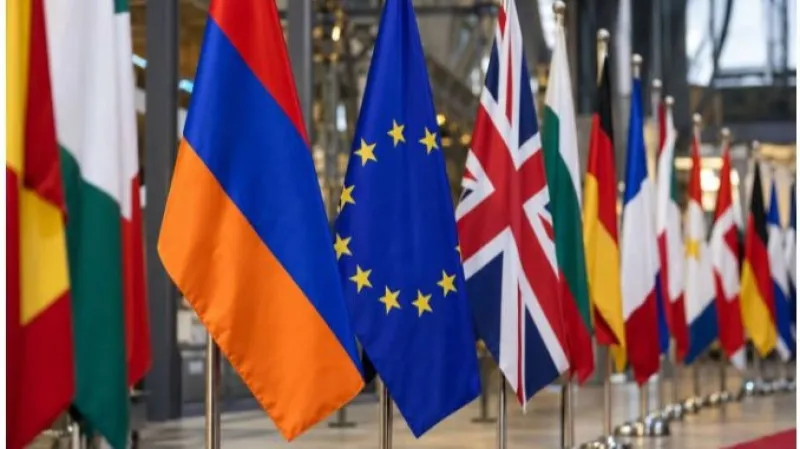
1in.am Ten years ago, Brexit was perceived as the beginning of the disintegration of the European Union. It became an example for those who believed that a state outside the EU could operate more freely and efficiently. Today, it is Britain itself that is reassessing the results of that choice. The British experience showed that leaving the EU does not in itself mean greater freedom and power. The consequences of Brexit became more visible in the fields of economy, trade, and political influence. Britain lost part of the opportunities that were available within the EU without additional conditions. Now London is trying to restore some of those connections. For this reason, Brexit is gradually becoming not an example, but a warning.
The issue of relations with Europe has once again become one of the main political discussions about the future of the country in Britain. Andy Burnham has returned the question of Britain's European future to the agenda, including the possibility of full membership in the EU. Ten years was enough for Britain to assess the economic and political value of its ties with Europe through its own experience.
In 2016, Britain closed the chapter on EU membership. Ten years later, that chapter is reopening, now with the demand to reassess the price and results of the ten-year experience of Brexit.
The key promise of Brexit was the restoration of national sovereignty. The past decade has shown that sovereignty is not just the right to make independent decisions. It is also the power to turn those decisions into economic outcomes, political influence, and security. The strength of a state also includes market access, economic weight, and the ability to operate effectively with partners. After Brexit, some of these opportunities were limited: trade became more complicated and costly. According to the UK Office for Budget Responsibility, as a result of Brexit, the British economy could be about 4 percent less efficient in the long term.
Burnham's words again raise the fundamental question: what does it give a state to be outside the EU and what opportunities does it deprive it of? Ten years later, this discussion is now assessed not by slogans, but by economic outcomes, market access, and political influence.
Macron today addressed the possibility of Britain's return to the EU during a meeting with Spanish Prime Minister Pedro Sánchez. Macron's Welcome back indicated that Britain's return to the EU is no longer considered an unlikely idea. It is gradually turning into a possible political scenario.
For years, Brexit was one of the main examples for European nationalist forces: if Britain could leave the EU, others could do the same. Today, that argument is losing its strength. The British experience showed that leaving is not just a political decision, but a long-term economic and strategic calculation. Now the focus is not on the possibility of leaving, but on its price.
France's "National Rally" has already abandoned the idea of Frexit, while Germany's "Alternative for Germany" continues its hard Eurosceptic stance. The British experience has become an uncomfortable argument for both. When Britain, having left the EU, is now discussing the possibility of returning ten years later, it is difficult to maintain Brexit as a successful precedent and a ready path for others.
Brexit was also a favorable geopolitical development for Russia. A more fragmented Europe weakens unified positions on defense, sanctions, and energy security issues. During the 2016 referendum, there were even reports of attempts at Russian influence.
Today, Europe is living in a different security reality. The EU is rapidly expanding its defense capabilities: Readiness 2030 and the SAFE's 150 billion euro credit facility aim to strengthen collective defense capabilities, while broader plans foresee mobilizing up to 800 billion euros. Britain is also becoming more closely linked to the European security system. In September, Andy Burnham and Ursula von der Leyen discussed ways to jointly counter Russian hybrid threats and disinformation. Against this backdrop, Britain's possible return to the EU is also a matter of European security and the balance of power.
Britain's possible return to the EU would also change Europe's strategic weight. We are talking about a nuclear state, one of Europe's leading military powers, and a permanent member of the UN Security Council. Its return would strengthen the political and security foundation of European unity. Such a Europe would be a much more difficult environment for Russia, with more cohesive defense, greater political weight, and a higher capacity to withstand external pressures.
The British experience is also important for Armenia. Armenia has already begun the EU membership process and has made European integration part of its state policy. This shift in London is an important episode on that path.
Having left the EU, Britain is now discussing closer integration and the possibility of return ten years later. This is a strong argument in favor of the idea that European integration is not just an ideological choice. It relates to markets, investments, security, political influence, and the opportunities for the country's development.
The value of this experience for Armenia lies precisely here. The European choice should be viewed with a long-term calculation. For a small state, being part of a broad economic and political system can mean greater resilience, a more predictable environment, and broader opportunities.
The British experience showed that the real price of leaving the EU unfolds over time. For Armenia, this is an important message: the European direction should be assessed in terms of the country's long-term development, security, and state capabilities.
* This text was automatically translated by Artificial Intelligence (AI).


 ENGLISH