The Logic of History: Armenia’s Irreversible Leap toward Civilization
15-06-2026 15:52:58 | Armenia | Interviews
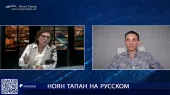
In the wake of a highly contested parliamentary election, Armenia finds itself at a defining geopolitical and domestic crossroads. To dissect the far-reaching implications of these developments, Noyan Tapan hosted political analyst, author, and Doctor of Political Science, Arkadi Vardanyan, for an in-depth conversation regarding the country's immediate and long-term future.
Despite fierce efforts by opposition factions to challenge the legitimacy of the ballot, Prime Minister Nikol Pashinyan has already secured critical international congratulations, solidifying the vote's outcome on the global stage. For Vardanyan, the choice made by the electorate was as pragmatic as it was inevitable: selecting the "lesser of two evils" to avert a catastrophic regression into past dependencies.
Sidestepping the "Russian Swamp"
Throughout the interview, Vardanyan consistently anchored his analysis in what he terms "historical logic"—a force he argues can neither be cheated nor halted. According to this logic, the electoral triumph of the ruling Civil Contract party was essential to prevent Armenia from being dragged back down.
"Under any other choice, we would have found ourselves stuck in the Russian swamp for a very long time, accompanied by deeply unpleasant experiences," Vardanyan remarked, noting that Russia itself is rapidly sinking into its own domestic and economic quagmire.
He dismissed the post-electoral leverage of Moscow and its alleged attempts to subvert the vote by covertly backing pro-Russian figures. Commenting on rumors that millions were funneled to fly in Russian-Armenian citizens to vote for alternative blocs, Vardanyan highly praised the clever counter-measures deployed at Zvartnots Airport. Arriving citizens eligible for military duty were promptly directed to mandatory 25-day military training camps—a fully legal mechanism that effectively neutralized external provocations.
The Illusions of Opposition and the Mandate for Justice
Addressing the domestic political theater, Vardanyan expressed skepticism about the opposition's ongoing threats of street struggles or legal challenges in the Constitutional Court. He emphasized that a true street movement requires an untainted, honest leader—a figure currently absent from the political landscape.
Furthermore, he outlined the mathematical realities of the new parliament. Ironically, even if minor shifts during recounts push opposing figures across the entry threshold, the redistribution mechanics will only reinforce the ruling party's constitutional majority. Therefore, the noisy rhetoric of the opposition remains, in his words, "practically non-existent" in terms of real political efficacy.
However, the political analyst did not spare the current administration from sharp criticism, pointing out that despite years in power, critical reforms within the judicial system have heavily stalled. This legislative inertia is precisely why controversial figures from past regimes remain active in politics instead of facing lifelong imprisonment.
To maintain the public’s fragile trust, Vardanyan insists that Pashinyan must firmly deliver on his post-election promises to aggressively target corruption, bribery, and state embezzlement.
"The greatest thirst within any society is caused by the absence of justice," Vardanyan warned. "Injustice is deeply painful for every human being... If justice suffers another defeat because promises go unfulfilled, the government will lose the people's trust irrevocably."
Moving Beyond Russia’s Economic Coercion
When questioned on the tangible economic threats and restrictions imposed by Russia on Armenian goods, Vardanyan remained unfazed. Drawing parallels to past Russian embargoes on Georgian wines and mineral water, he pointed out that such aggressive economic maneuvers ultimately harm the aggressor’s own market.
Even the critical issue of natural gas supply is a double-edged sword. Since Armenia's internal gas distribution network is entirely owned by Russia's Gazprom, cutting off the supply would amount to Moscow economically sabotaging its own corporate subsidiary. Ultimately, Vardanyan argued that whether the Kremlin chooses to extend formal congratulations or weaponize trade, it holds little consequence for the collective consciousness of the Armenian public.
A Horizon Filled with Civilizational Success
Looking toward the global horizon, the article details a bright roadmap for Armenia's future integration. Following the high-profile European Political Community Summit and the Armenia-EU Summit, the nation’s trajectory has shifted decisively.
Vardanyan clarified that Armenia is not merely pivoting "West," but is rather returning to its natural home: the domain of global civilization, a space where Armenian culture historically experienced its own Renaissance centuries before Europe.
This civilizational alignment is expected to unlock unprecedented economic opportunities. Vardanyan predicts a massive influx of foreign direct investments coming not just from Washington and Brussels, but from advanced democratic economies worldwide, including Japan, South Korea, Australia, and New Zealand. Crucially, because these funds will be funneled into economic development and elevating the public's quality of life—rather than lining the pockets of corrupt officials—Armenia is poised for historic advancements.
Concurrently, trade lines are expected to open up across regional borders, extending to Turkey and Azerbaijan. While deep geopolitical scars and the critical issue of the Armenian Genocide will remain firmly on the international agenda until formal recognition is achieved, Vardanyan firmly believes that historical grievances will not block economic pragmatism.
"Trade is always a good thing; it brings development," Vardanyan concluded on a characteristically optimistic note. "Armenians have been renowned as successful merchants since the times of Ancient Rome. Development is infinitely better than regression, and on this path, there can be no two opinions. New and resounding victories await Armenia."


 ENGLISH
  Հայերեն
 Русский
 Դաս. հայերեն
 French