The 'Virus of Freedom': How Armenia’s Latest Ballot Reshapes Its Geopolitical Axis
15-06-2026 18:00:50 | Armenia | Interviews
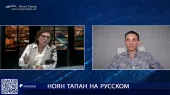
In a recent broadcast of Noyan Tapan, host Gayane Arakelyan sat down with prominent historian and political scientist Mikayel Zolyan to dissect the post-election reality. The discussion highlighted a striking diplomatic divergence: while U.S. President Donald Trump warmly congratulated Armenian Prime Minister Nikol Pashinyan—stating he was proud to support his re-election and expressing no doubt that "beautiful Armenia will achieve such a level of greatness and success that will exceed the wildest expectations"—Russian President Vladimir Putin has notably remained silent. Addressing this, Pashinyan remarked to journalists that if Russia has concerns, Yerevan will "patiently try to dispel them," adding that he knows Putin to be a "rational person who relies on facts and arguments".
The CSTO Deadlock and the 'Severance Package' Strategy
A central focal point of the political transition remains Armenia’s frozen status within the Collective Security Treaty Organization (CSTO). Though Russian Foreign Minister Sergey Lavrov noted that Armenia has frozen its participation for over two years, Yerevan has stopped short of officially submitting a formal exit application.
Pashinyan recently stated that if CSTO member states decide to exclude Armenia, the government will simply "take this decision into account". Zolyan described this passive approach through a vivid analogy:
"It's somewhat like a person who has decided to leave their job, but instead of writing a resignation letter, they simply stop showing up to work, waiting to be officially terminated so they can collect a severance package".
Meanwhile, diplomatic channels remain open as Russian Ambassador Sergei Kopyrkin recently returned to Yerevan to resume his duties following consultations in Moscow.
Moscow’s Fear of Democratic Contagion
According to Zolyan, the Kremlin's anxieties regarding Armenia are twofold. Beyond the obvious concern of losing a historic "geopolitical outpost in the South Caucasus," there is a deeper ideological fear.
"Armenia is a carrier of the 'virus of freedom' and democracy," Zolyan asserted. He noted that unlike other post-Soviet states like Moldova or Ukraine, Armenia maintains a visa-free regime allowing Russian citizens to enter with internal passports, and it remains integrated into the CIS and the Eurasian Economic Union (EAEU). This structural integration makes Moscow deeply uncomfortable, as ordinary democratic activities in Yerevan are often misconstrued by the Kremlin as anti-Russian provocations.
Zolyan recalled his own experience when a recording of a seminar he participated in was broadcast by Russia Today, framed as an attempt to train activists to plot a revolution inside Russia. "Naturally, we did nothing of the sort, but that is how it is perceived in Russia," Zolyan noted, explaining why modern Kremlin propaganda seeks to diminish Armenia's democratic achievements by painting all global leaders as equally corrupt.
A Controlled Defeat: Why Putin Did Not 'Lose Face'
Despite the Kremlin's active backing of opposition forces, Zolyan argues that while Putin lost the election, "he did not lose overwhelmingly". Pashinyan’s Civil Contract party secured a decisive victory, capturing over 50% of the vote—an increase of approximately 38,000 to 40,000 votes compared to 2021. However, pro-Russian factions managed to secure roughly one-third of the parliament.
Zolyan observed that this partial victory for Moscow acts as a stabilizer against open conflict:
"Unlike the Maidan in Ukraine, which was a total rout of pro-Russian forces and led Putin to initiate operations in Crimea and the Donbas, in Armenia, Putin managed not to lose face. He has his people in parliament... and can continue the game without sliding into a direct invasion".
Had the pro-Russian coalition clinched a majority, Zolyan warns that Armenia would have faced a bleak trajectory resembling "something between Ivanishvili's Georgia and Lukashenko's Belarus," characterized by the persecution of civil society, the dismantling of Western programs, and the deliberate sabotage of the Washington peace agreements.
Economic Leverage and the TRIP Project
The regional unblocking of infrastructure via the TRIP project—which aims to open borders with Turkey and Azerbaijan—is poised to dramatically reduce Armenia’s economic insulation and its reliance on Russia. While certain domestic circles fear military vulnerability following a potential withdrawal of the Russian military base in Gyumri, Zolyan dismissed fears of subversion, noting that the peace process is firmly underway. Instead, he cautioned that the primary risks are economic (such as cheap Turkish agricultural imports flooding the market) and psychological.
In response to these shifting dynamics, Moscow has periodically utilized economic levers, such as symbolic bans on Armenian flour or threatening to disrupt gas supplies. However, Zolyan considers these measures to be double-edged swords. If Russia cuts off the gas supply or drastically inflates prices, Armenia will be forced to adapt by nationalizing Gazprom Armenia and seeking alternative energy sources via Iran, Azerbaijan, or solar power. "In the end, this will only drive Armenia even further away from Russia," he noted.
Anatomy of the Opposition and the Path to Decolonization
As the Central Electoral Commission conducts standard recounts ahead of the final results, the streets of Yerevan remain peaceful. Zolyan broke down the fragmented nature of the parliamentary opposition, noting that Gagik Tsarukyan’s Prosperous Armenia—which is currently hovering near the 4% threshold—is the most moderate and negotiable. Conversely, Samvel Karapetyan’s political force consists largely of non-political figures executing orders from Moscow, who are poorly equipped for rigorous parliamentary debate.
The most formidable opposition force remains Robert Kocharyan’s Armenia bloc. The bloc has successfully courted a segment of the youth who have no living memory of Kocharyan's presidency but are deeply dissatisfied with the loss of Nagorno-Karabakh under Pashinyan. This demographic, Zolyan explained, was heavily influenced by years of conservative, nationalist indoctrination embedded in the education system under previous administrations.
Nevertheless, a major street escalation remains unlikely. Pashinyan maintains firm control over the domestic security apparatus, and the extensive Russian intelligence network in Armenia has faced unprecedented disruption—marked recently by the high-profile arrest of Andranik Tevanyan on charges of collaborating with Russian special services.
Ultimately, Zolyan views Armenia’s current trajectory as a historic era of "decolonization through the ballot box". Bolstered by a new wave of European integration since 2023—including the European Political Community and EU-Armenia summits—Yerevan is learning to project a sovereign foreign policy.
"Armenia's goal is not to harm Russia or simply serve the West," Zolyan concluded. "The goal is to become an equal partner".


 ENGLISH
  Հայերեն
 Русский
 Դաս. հայերեն
 French