The Partitioned Parliament: How Armenia's 2026 Elections Solidified a Geopolitical Fault Line
15-06-2026 16:52:21 | Armenia | Interviews
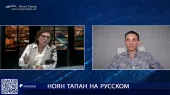
In a recent broadcast on the prominent media platform Noyan Tapan, seasoned public-political figure and former Supreme Council member Azat Arshakyan delivered a sharp, unvarnished analysis of Armenia’s newly formed 2026 National Assembly. Speaking with host Gayane Arakelyan, Arshakyan—who personally participated in the election cycle as a parliamentary candidate—characterized the post-election landscape not as a traditional domestic victory, but as a calculated geopolitical compromise between major global powers.
A "Compromise" Parliament under Foreign Shadows
According to Arshakyan, the election outcome was heavily influenced by a high-level Moscow meeting between Russian President Vladimir Putin and Armenia's Prime Minister. Rather than fostering a highly competitive domestic debate that could serve as a platform for national liberation, Arshakyan argues that the summit resulted in a de facto "quota" agreement.
"A compromise national assembly was formed," Arshakyan stated during the interview. "The meeting between the RF President and the Prime Minister of the Republic of Armenia was effective in that half of the power in Armenia remained with Russia. We essentially have a 50/50 parliament".
Arshakyan noted that while the ruling Civil Contract party retains its pro-European, independent, and democratic rhetoric, a massive conservative, reactionary bloc remains firmly under Moscow's sphere of influence. He used stark historical analogies to criticize this pro-Russian faction, colorfully comparing their mindset to that of a kukharka—a low-tier Tsarist-era kitchen servant or dishwasher. He warned that this faction's ultimate trajectory is to strip Armenia of its sovereignty and return it to the status of a "province, colony, or gubernia" ruled by translated laws from Belarus or Tatarstan.
Pashinyan’s Fluid Politics and the Threat of Reversal
A significant portion of the interview focused on the political conduct of Prime Minister Nikol Pashinyan. Arshakyan criticized the Prime Minister for failing to utilize the state's legal framework, the Ministry of Justice, and the courts to protect the integrity of the elections against illicit financial flows and vote manipulation. He alleged that while Pashinyan publicly acknowledged the existence of a vote-stealing "mafia," he chose not to exercise the full power of the law to dismantle it.
Furthermore, Arshakyan challenged the European media's characterization of Pashinyan as a steadfast pro-Western revolutionary. He pointed out that grass-roots pro-European initiatives—such as the EU association signature drives and the raising of the European flag—were entirely organized by outside figures like Tigran Khzmalyan, Aram Sargsyan, Arman Babajanyan, and Hovsep Khurshudyan.
Pashinyan merely observed these pro-European efforts from a safe distance without initially interfering or helping.
Once the European Union welcomed the movement's success, the ruling party capitalised on the momentum to codify it.
Arshakyan warned that Pashinyan’s political alignment is highly fluid, moving wherever the geopolitical wind blows strongest.
When asked by the host whether this new parliament could realistically reverse Armenia's European trajectory, Arshakyan stressed that a historical precedent already exists. He recalled September 3, 2013, when the Republican Party under Serzh Sargsyan unilaterally bypassed the public and voted in the National Assembly to scrap years of European integration in favor of the Eurasian Economic Union. "If they did it then, what is to stop this team from doing it now?" Arshakyan questioned, highlighting the fragile nature of Armenia's current sovereignty.
The Geopolitical Realignment: Trump’s "Gingerbread" and the West's Strategy
Despite the heavy Russian presence in the legislature, Arshakyan observed that Russia is structurally retreating from the South Caucasus due to a lack of resources and modern ideas. He noted that Moscow has consistently been "absent" during critical crises, including those in Nagorno-Karabakh, Lachin, Nakhichevan, and Kars.
Taking Russia's place is the West, which views Armenia as a vital geographical pivot. Arshakyan pointed out that even before the final election results were officially certified on June 14, U.S. President Donald Trump extended his congratulations to Pashinyan.
"Uncle Sam told us to count well," Arshakyan quipped regarding the early American intervention. Commenting on Trump's congratulatory letter, which predicted that Armenia would reach a level of greatness and success exceeding wildest expectations, Arshakyan remarked: "It’s a beautiful, solid gingerbread. He gave us gingerbread and reminded us there is a whip, but this message wasn't really for us—it was an open dialogue sent directly to the Kremlin".
Armenia's Global Function
In concluding his remarks, Arshakyan rejected the notion that Armenia should fear being left exposed to Turkey if Russia completely withdraws. He argued that Armenia holds an indispensable, permanent function for global powers—including the United States, the EU, and even China, which maintains a massive embassy complex in Yerevan.
Armenia's structural role is to serve as an intellectual, humanitarian, and strategic outpost directly in the rear of Turkey and Iran. Because Turkey's regional survival has historically been propped up by a succession of Russian leaders from Lenin to Gorbachev, Arshakyan concluded that a strong Western alliance shields Armenia. "We don't need to fear Turkey," Arshakyan stated firmly. "Turkey should fear us, because we are an ally of the United States of America".


 ENGLISH
  Հայերեն
 Русский
 Դաս. հայերեն
 French