«74.5% decline. Systemic reasons for the crisis in the export of Armenian agricultural products
After the restrictions on the entry of Armenian agricultural products into the Russian market, local producers-exporters are facing the risk of irreversible economic losses. However, the real problem is not just the closure of the Russian market, but the catastrophic gap that has emerged between the years of statements made by the current authorities regarding market diversification and actual steps taken. According to the official data from the Food Safety Inspection Body of the Republic of Armenia for June 2026, alternative export routes have practically not been created, and the authorities' statements about entering the European Union market were merely the result of political populism and illusions disconnected from reality.
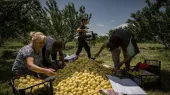
The comparison of the June data shows the real scale of the crisis in the sector. If in June 2025 the total export was 31,738 tons, then in June 2026 it decreased to 8,095 tons. A decrease of about 23,643 tons of exported produce has been recorded, which constitutes a 74.5% decline. The statistics for the Russian direction are even more shocking: in June 2025, about 27,937 tons of fruits and vegetables were exported to the Russian Federation, mainly high-demand apricots, tomatoes, peppers, and cherries, while in June 2026, those volumes amounted to only 110.4 tons, mainly mulberries and apples. Exports to Russia have decreased by more than 27,826 tons, recording a 99.6% decline, which indicates that, despite various assurances from the political authorities, the market remains practically closed for Armenian products.
The flower export sector, which had been experiencing dynamic development in recent years, is also in a paralyzed state. In June 2025, 5,784,071 flowers were exported to the Russian Federation, but in June 2026, there were no exports measured in units to Russia at all. Overall, flower exports have decreased by about 50.3% compared to the same period last year.
As for the European direction, according to the official data from the Government of Armenia, there are still no practical results. The impossibility of entering the EU market is due to a number of systemic issues, for which the state has not taken any steps towards resolution. Strict phytosanitary and certification standards, the absence of recognized laboratories and certification infrastructures by the EU, logistical issues, and the extremely high cost of freight have actually created insurmountable barriers. Small and medium farmers have not been provided with state support to obtain the international certificates required by the EU, which has deprived them of competitiveness.
The sharp decline in the export of fruits, vegetables, and flowers signifies not only tens of millions of dollars in economic losses but also a direct risk of bankruptcy for hundreds of greenhouse farms, farmers, and logistics companies. When a producer is deprived of the opportunity to sell the results of their labor, the process of depopulation of the village and the abandonment of agricultural lands begins. Armenian agriculture is losing its potential every day, while the authorities continue to be satisfied with meaningless statements, leaving the farmer alone with their problems».
* This text was automatically translated by Artificial Intelligence (AI).


 ENGLISH