From Hormuz to Bab el-Mandeb: The energy war enters a new phase. - Shahan Ghantaharyan
05-10-2026 17:09 Lebanon Interviews
Տառաչափ՝
Listen to article🎙️ AI Voice00:00 / ~8 min
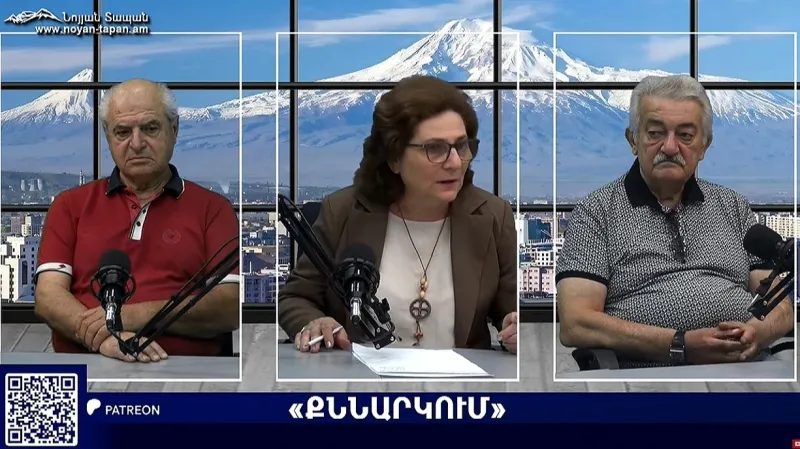
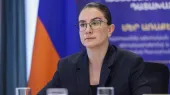
A new geopolitical and energy situation is forming in the Middle East: alongside the ongoing crisis around the Strait of Hormuz, the Bab el-Mandeb direction is escalating, while the Houthi advance creates a new threat to Saudi Arabia and global trade communications. At the same time, Washington is avoiding direct military involvement against the Houthis. What is changing in the regional power dynamics, and is the world on the brink of new energy shocks? On this topic, "Noyan Tapan" spoke with political analyst Shahin Ghantaharyan.
– The recent developments in Yemen seem to open a new phase in the Middle East war. Can we say that the Iranian front is somewhat being pushed to the background?
– The new escalation in Yemen shows that the Middle Eastern conflict is shifting to a new geographical direction. The Iranian front has not disappeared, but the Yemeni direction has become an important continuation of it.
The Houthi advance and the expansion of control over Bab el-Mandeb give Tehran the opportunity to exert additional pressure on the region and especially on energy communications. In recent weeks, the Houthis have also targeted Saudi Arabia's energy infrastructure.
In this sense, the activation of the Yemeni front should be viewed not as a separate event, but as part of Iran's regional strategy.
– In this situation, how important is Bab el-Mandeb compared to Hormuz?
– Bab el-Mandeb can be seen as the strategic parallel to Hormuz. If the closure of Hormuz limits oil exports from the Persian Gulf, then control over Bab el-Mandeb threatens international trade communications passing through the Red Sea and the Suez Canal.
In other words, pressure on both straits creates a much broader problem for the global economy.
The peculiarity of the situation is that, in the context of the Hormuz crisis, Saudi Arabia had shifted part of its oil exports towards the Red Sea. Now, with Bab el-Mandeb also under Houthi pressure, that alternative route is also at risk.
– So, it’s not just about military operations, but also about exerting pressure on the global energy market?
– Yes. This already has the logic of a war economy.
If both crucial nodes for oil transportation are simultaneously limited, the market reacts immediately. The rise in oil and fuel prices could turn into a new wave of inflation, and its consequences will be felt not only by the countries in the region but also by Europe, Asia, and the USA.
Therefore, developments around Bab el-Mandeb should be viewed not only as another phase of the Yemeni war but as a global energy security issue.
– In this situation, Saudi Arabia seems to be in the most vulnerable position.
– Saudi Arabia is indeed one of the first to feel this pressure. Riyadh is simultaneously facing threats created by Iran and the Houthis.
Saudi Arabia is preparing for a large-scale counteroffensive against the Houthis, one of the goals of which is to restore control over Red Sea communications. However, it is noteworthy that the American side does not want to be directly involved in military operations.
– Why is Washington avoiding providing direct military support to Saudi Arabia?
– The calculations of the USA are quite understandable. Washington does not want to open another large-scale military front, especially under conditions where it is already spending significant military resources towards Iran.
Moreover, direct American strikes against the Houthis could have the opposite effect, pushing them to completely close or threaten Bab el-Mandeb. In that case, the rise in oil prices could accelerate even more. This is precisely the scenario that Washington is trying to avoid.
– Here, the American domestic political factor is also important, especially on the eve of the November midterm elections.
– Certainly. A sharp rise in oil prices directly affects American consumers and, consequently, political sentiments.
If Washington gets involved in a new military front, and as a result, fuel prices rise, the political cost could be very heavy.
Therefore, the current approach of the USA can be characterized as limited involvement: support at the intelligence and informational level, but avoiding direct combat operations.
– However, can these regional processes be explained solely by American domestic political calculations?
– No. There is a much broader geopolitical reconfiguration taking place here.
The reduction of American military presence in Iraq, the avoidance of direct involvement in the Yemeni war, the formation of new defensive partnerships by Saudi Arabia, and the activation of contacts with Russia in various directions are all part of the same general logic.
Countries in the region are gradually trying to reduce their dependence on a single power center and create alternative security and economic ties.
– In this context, how do you assess the significance of possible Russian-American energy consultations?
– If Russian-American contacts in the energy sector indeed expand, it will be a very important signal. Energy resources have today become not only economic but also geopolitical tools.
On one hand, there is the situation created around Hormuz, and on the other, the escalation of Bab el-Mandeb. In these conditions, the major energy players in the world are forced to reconsider their relationships, supply routes, and mechanisms for ensuring market stability.
– So, what is the overall picture that is forming today?
– The picture is quite clear: Hormuz continues to remain a zone of strategic pressure, Bab el-Mandeb is turning into a second key front, and the energy market is gradually becoming one of the main targets of the war.
All of this means that the Middle Eastern war is no longer just a regional war. It is turning into a process that affects global trade, energy security, and the relationships of great powers.
If Hormuz and Bab el-Mandeb are simultaneously subjected to prolonged disruptions, we could be dealing not only with a new military crisis but also a global economic crisis.
Thus, the main question forming today in the context of war economy is not only who controls the battlefield but also who controls the vital routes of energy and global trade.
* This text was automatically translated by Artificial Intelligence (AI).