Rails, Rivals, and Realism: Decoding the New South Caucasus Geopolitics
26-06-2026 16:09 Հայաստան Հարցազրույցներ
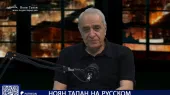
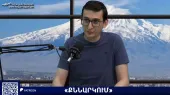
The geopolitical architecture of the South Caucasus and the broader region is undergoing a profound and highly volatile transformation. As traditional power dynamics fracture under the weight of ongoing conflicts, the region is witnessing a rapid repositioning of its major players. To dissect these complex shifts, the prominent analytical program Noyan Tapan hosted Nelli Minasyan, a leading Turkologist and Head of Department at the Institute for Armenian Studies at Yerevan State University.
In a wide-ranging and insightful interview, Minasyan pulled back the curtain on the recent diplomatic maneuvers between Moscow and Ankara, the European Union's hardening stance toward Turkey, and the critical socioeconomic currents shaping contemporary Armenian-Turkish relations.
The Illusions of Co-Management: Rival Allies in the Caucasus
The point of departure for the discussion on Noyan Tapan was the recent visit of Turkish Foreign Minister Hakan Fidan to Russia. While public statements heavily emphasized the "3+3" regional consultative platform and the seemingly amicable thesis that Moscow and Ankara should henceforth "cooperate rather than compete" in the region, Minasyan urges a far more sober and realistic assessment.
"In professional literature, Russia and Turkey are often characterized as 'competing allies,'" Minasyan explained. "While they may find transactional alignments on specific issues, deeply down they remain strategic adversaries."
According to the expert, the shift in the balance of power began in earnest following the 2020 Nagorno-Karabakh war, a turning point where Russia began steadily losing its historic grip on the region, allowing Turkey to aggressively solidify its footprint through its overt military and political support of Azerbaijan. This decline was further compounded by the ongoing war in Ukraine.
Minasyan sharply dismissed the notion that Russia can successfully navigate a "co-management" scheme with Ankara to split spheres of influence. Pointing to the precedent of the joint monitoring center in Aghdam—where Russia initially delayed and resisted a Turkish presence but was ultimately forced to concede, only for the center to now be defunct with zero Russian influence left—she highlighted a clear trajectory.
"If Turkey has the opportunity to expand its influence, it will not go out of its way to share it with its historical rival," Minasyan noted. "On the contrary, Turkey will maximize its gains completely at the expense of Russian interests—not just in the South Caucasus, but in Central Asia, Ukraine, and the Black Sea basin as well."
The "3+3" Platform: A Stillborn Diplomatic Exercise
When pressed by the host regarding the efficacy of the "3+3" format (comprising Armenia, Azerbaijan, Georgia, plus Russia, Turkey, and Iran), Minasyan categorized it as a "non-viable, stillborn format." Despite public diplomatic posturing and discussions about hosting a session in Yerevan or Baku, she emphasized that a genuine security architecture cannot be erected on this platform.
Every participating state holds radically divergent security paradigms and conflicting vital interests. For Iran, its involvement since 2020 was primarily born out of an acute anxiety that Moscow and Ankara would cut a bilateral deal in the South Caucasus and freeze Tehran out of the regional equation. However, if the geopolitical landscape shifts—particularly regarding Western sanctions—Iran's regional calculus will undergo its own massive revaluation.
Western Levers: Individual Sanctions and Regional Centrality
A fascinating dimension of contemporary Turkish foreign policy is its delicate balancing act with the West. Minasyan stressed that despite tactical engagements with Russia driven by economic necessities—such as tourism and the fact that 40% of Turkey's natural gas originates from Russia—Turkish President Recep Tayyip Erdoğan carefully avoids crossing Western "red lines." If forced into a hypothetical binary choice between deepening ties with Moscow or sustaining its structural integration with the West, Ankara will invariably choose the latter.
Nevertheless, Western patience with Ankara appears to be wearing thin. Minasyan pointed to a groundbreaking resolution recently adopted by the European Parliament. Moving past the traditional, generalized critiques of human rights, this resolution targeted specific individuals—namely, Turkish Justice Minister Yılmaz Tunç—over highly controversial judicial actions, including the targeting of Istanbul Mayor Ekrem İmamoğlu.
"The European Parliament explicitly characterized Turkey's judiciary as being entirely in the hands of a single individual, warning that the country is moving toward an absolute authoritarian regime," Minasyan emphasized. "By introducing targeted, individual accountability, Europe is placing Turkish officials on the same conceptual plane as those of Iran, Russia, and Syria."
Furthermore, the broader Middle Eastern landscape could pose a structural challenge to Turkey’s strategic value. Historically, whenever Iran adopts a more Westward-facing stance or achieves sanction relief, Turkey's premium as a regional bridge drops dramatically. Given Iran’s immense natural resources and superior geographic and chemical infrastructure potential, a Western-Iranian rapprochement would swiftly pivot the center of gravity back to Tehran, leaving Turkey far less vital to Western security frameworks.
The Pragmatism of Tracks: Armenian-Turkish Relations
Turning the focus to the direct bilateral track between Yerevan and Ankara, the discussion highlighted a distinct dichotomy between political imitation and pragmatic economic interests. While Turkey has engaged in prolonged "imitation diplomacy"—such as failing to implement the 2022 agreement to open the land border to third-country nationals even now in 2026—there are signs of tangible movement on specific, mutually beneficial infrastructure.
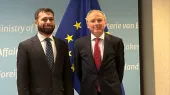
Recent high-level meetings in Brussels have catalyzed concrete steps toward the restoration of regional railway networks. Turkey's Minister of Transport and Infrastructure, Abdulkadir Uraloğlu, recently confirmed that technical work on their side of the railway line has commenced, while Armenia is moving forward with organizing tenders for its respective segments. Unlike symbolic initiatives like the joint restoration of the historic Ani Bridge, the railway represents a convergence of hard, pragmatic economic interests for both capitals.
Concurrently, Turkey is embarking on a state-directed push to boost tourism in its eastern provinces (historically Western Armenia). Interestingly, Turkish tour operators have been instructed to include Armenian cultural and architectural heritage sites, such as the Cathedral of the Holy Cross on Akhtamar Island, in their active portfolios. While Ankara frames this strictly through the lens of its own domestic cultural mosaic to rehabilitate its international image, it highlights a growing recognition of the economic value of the region's diverse heritage.
Divergent Perspectives: Public Perceptions in Turkey and Azerbaijan
Concluding her analysis on Noyan Tapan, Minasyan drew a sharp contrast between how Armenia is viewed in the public and media spheres of Azerbaijan versus Turkey. In Azerbaijan, the state apparatus relies on a deeply institutionalized, generational propaganda machine designed to maintain societal hostility toward Armenians as a tool for regime survival. Consequently, Azerbaijani media remains obsessively hyper-focused on Armenia, driven by systemic distrust.
Turkey, conversely, is a major regional power with an expansive and complex domestic and global agenda. In Turkish media and society, the "Armenian factor" does not occupy a central space of existential anxiety.
"When Turkish bloggers, researchers, and ordinary citizens visit Armenia, their impressions are overwhelmingly positive," Minasyan observed. "They note the deep cultural and domestic commonalities, the hospitality, and the complete absence of aggression when speaking Turkish in Yerevan."
This societal baseline is even reflected in border regions like Kars and Iğdir, where local populations and merchant groups openly voice their desire for open borders, trade, and tourism. For these communities, the opening of the border is viewed not through the zero-sum lens of geopolitical conflict, but as a vital economic lifeline that could transform nearby hubs like Gyumri into thriving centers of medical tourism and commercial exchange.
Ultimately, as Minasyan’s analysis demonstrates, while state-level diplomacy remains hostage to broader geopolitical chess matches, the underlying economic realities and societal interactions continue to carve out their own, separate paths toward a shifting regional paradigm.


 ՀԱՅԵՐԵՆ

 Русский
 English
 Արեւմտահայերեն
 French