Breaking the Chains of Hegemony: How Armenia Navigates the Realities of Multi-Alignment and Internal Reforms
25-08-2026 17:10 Հայաստան Հարցազրույցներ
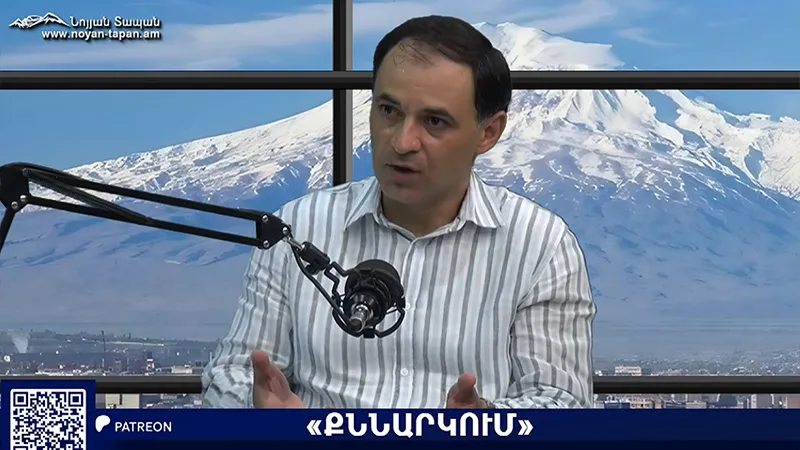
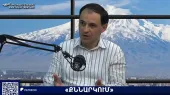
In an insightful discussion hosted by the Noyan Tapan broadcasting service, political analyst Hayk Sukiasyan addressed the evolving geopolitical dilemmas, economic threats, and institutional challenges confronting modern Armenia. Hosted by journalist Gayane Arakelyan, the program provided a comprehensive evaluation of Armenia’s external ties with Moscow, the West, and regional powers, alongside the persistent internal hurdles facing the nation's political system.
Institutional Decay and Russia’s Political Tactics
Addressing recurring rumors regarding pressure from Eurasian political structures—such as the Collective Security Treaty Organization (CSTO) and the Eurasian Economic Union (EAEU)—Sukiasyan asserted that these coercive measures stem solely from Moscow, rather than the member states collectively.
"It is crucial to observe that these demands are not collectively presented by the member states of the CSTO or EAEU, but by Russia itself. This demonstrates that these entities are not functional institutional structures; rather, Russia is destroying them from within while shifting the blame onto Armenia—a traditional tactic in Russian politics."
Evaluating the economic lever often used to threaten Armenia—specifically energy prices and gas supplies—Sukiasyan downplayed the real potential of such blackmail, characterizing it as propaganda designed to induce public panic rather than an unmanageable physical threat. Pointing out Armenia's status as a top consumer market for Russian gas export, he emphasized that psychological warfare remains Moscow's primary weapon.
The Need for a Democratic Alternative
Turning to internal governance and parliamentary dynamics, Sukiasyan analyzed the deep polarizations within Armenian society and the legislative body. He noted that while external actors continuously aim to trigger internal crises, Armenia’s primary vulnerability lies in the lack of a mature, organized democratic alternative alongside the ruling government.
When asked about the political culture of self-proclaimed pro-European forces that fail to make significant electoral gains, Sukiasyan delivered a candid assessment:
"If you aspire to bring European political culture to Armenia, you must embody it. In European politics, when a party leader repeatedly fails at the polls, they step down. Remaining entrenched in party leadership for decades without generating new leadership reflects political egoism, which severely damages the democratic field."
He cautioned that if a genuine democratic alternative fails to consolidate, non-state or foreign-backed networks will move to fill the vacuum, posing severe long-term risks to sovereignty.
Orientation vs. Balance: The Foreign Policy Imperative
Revisiting the debate over Armenia’s geopolitical orientation, Sukiasyan strongly advocated for a policy centered on a balance of power rather than rigid alignment with a single power bloc. He stressed that centuries of "orientational thinking"—seeking a foreign savior—has hampered the nation's ability to develop statehood and independent strategic planning.
"A policy of strict orientation requires little intellectual effort—you simply submit to one bloc. Maintaining a true balance of power, however, requires high-level strategy and political intelligence. Our geography and national interests demand that we build a system of balanced forces around us so that no single external power can destabilize our state."
Positive Trajectories amidst Structural Hurdles
Despite the heavy historical legacy and deep-rooted Russian presence in Armenia’s infrastructure, economy, and state apparatus, Sukiasyan expressed optimism about recent diplomatic and economic strides. He pointed to key developments, including:
International Security Presence: The deployment of the EU Monitoring Capacity in Armenia.
Strategic Partnerships: Engagement with global powers, including the U.S. and key regional neighbors.
Economic Diversification: High-tech investments, including advanced artificial intelligence infrastructure projects that bolster national security through economic integration.
Concluding the discussion, host Gayane Arakelyan and Sukiasyan agreed that while the process of disentangling from asymmetric dependencies is gradual and complex, maintaining a deliberate strategy of balance, state-building, and professional training remains Armenia's path forward.


 ՀԱՅԵՐԵՆ